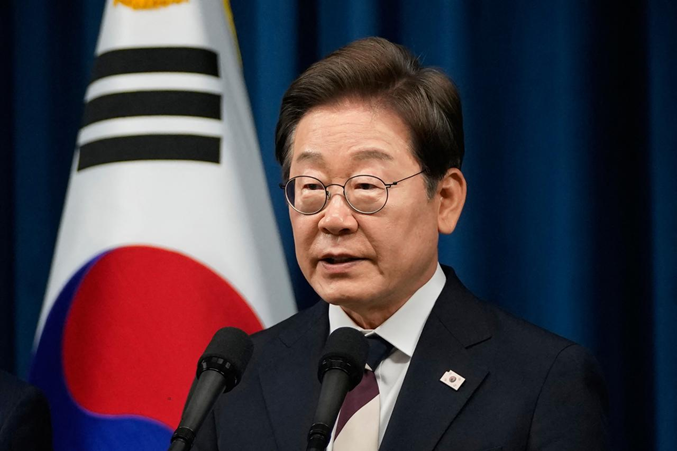
El presidente Lee Jae Myung concluyó en Turquía una gira de 10 días por Oriente Medio y África, poniendo fin a un viaje que subrayó las crecientes ambiciones globales de Corea y su propio perfil diplomático en ascenso.
Con inicio en los Emiratos Árabes Unidos y culminando en Sudáfrica, donde aprovechó la cumbre del G20 para impulsar la cooperación en resiliencia de la cadena de suministro y gobernanza de la IA, Lee buscó ampliar el alcance de Seúl en tecnologías estratégicas —desde inteligencia artificial y defensa hasta energía nuclear—, al tiempo que posicionaba a Corea como una voz más firme ante los desafíos globales.
En Ankara, última parada de su gira por cuatro países, Lee realizó una visita de Estado de dos días, donde se reunió con el presidente Recep Tayyip Erdoğan y firmó una declaración conjunta sobre asociación estratégica. El acuerdo sienta las bases para una nueva alianza entre la industria y la defensa y amplía la cooperación en energía, iniciativas ambientales y crecimiento sostenible.
SOUTH KOREAN PRESIDENTE LEE ENDS 10 DAY G-20 ANCHORED TOUR WITH NUCLEAR, DEFENSE, ENERGY PARTNERSHIP IN TURKEY
President Lee Jae Myung concludes a 10-day tour of the Middle East and Africa in Turkey, ending a trip that underscored Korea’s widening global ambitions and his own rising diplomatic profile.
Beginning in the United Arab Emirates and culminating in South Africa, where he used the G20 summit to push for cooperation on supply-chain resilience and AI governance, Lee sought to extend Seoul’s reach in strategic technologies — from artificial intelligence and defense to nuclear energy — while positioning Korea as a more assertive voice on global challenges.
In Ankara, the final stop on his four-nation tour, Lee paid a two-day state visit, meeting with President Recep Tayyip Erdoğan and signing a joint statement on strategic partnership. The agreement lays the groundwork for a new defense-industry alliance and broadens cooperation on energy, environmental initiatives and sustainable growth.
The joint statement said the two governments pledged to deepen their partnership, citing “mutual respect, trust and long-standing friendship” as they approach the 70th anniversary of diplomatic ties in 2027.
Among the new areas of cooperation, the most significant is an MOU between Korea Electric Power Corporation and Turkey’s Nuclear Energy Corporation, TÜNAŞ. The agreement allows KEPCO to formally begin pursuing a new nuclear power project in Turkey and sets a framework for collaboration from technology to regulatory approvals and localization. The two sides will also form a joint working group to evaluate potential sites and deepen technical exchanges.
Both countries reiterated their shared concerns over pressing international issues such as terrorism, organized crime and refugee challenges.
The leaders also shared an agreement on their commitment to the complete denuclearization of the Korean Peninsula and lasting peace and stability. Turkey expressed support for South Korea’s efforts to resume dialogue through proactive tension reduction and trust-building measures, aiming to expand inter-Korean exchanges, normalize relations, and advance denuclearization toward peaceful coexistence and shared prosperity.
Later, he visited the Korean War Memorial at Korea Park in Ankara, laying a wreath in tribute to Korean War veterans. He then met with members of the Korean community in Turkey before concluding his 10-day tour, returning to Korea on Wednesday morning.
Lee departed Seoul on Nov. 17 to attend the G20 summit in South Africa and, on the sidelines, visited the United Arab Emirates, Egypt and Turkey, signing a series of agreements to deepen cooperation in defense, energy, artificial intelligence and other strategic sectors.
In the UAE, South Korea secured priority participation in the UAE Stargate project, a multibillion-dollar effort to build a world-class AI infrastructure hub. The initiative — backed by OpenAI, NVIDIA and others — envisions a data-center cluster requiring up to 5 gigawatts of power, with Korean firms expected to supply key elements including power and cooling systems, according to the presidential office.
In Egypt, Lee met for 111 minutes with President Abdel Fattah el-Sisi, agreeing to deepen defense cooperation and pursue a Comprehensive Economic Partnership. Lee also said el-Sisi invited Korean firms to lead the Cairo Airport expansion, including its operation.
“We also discussed specific cooperation in the defense industry,” Lee said, noting that the project could “create significant opportunities for Korean businesses and the public.”
At the G20 summit in Johannesburg, Lee highlighted low growth and inequality as shared global challenges, calling for joint action against protectionism and supply-chain instability.
With the leaders of the United States, China and Russia absent, Lee’s role drew added attention. He proposed three strategies to foster inclusive global growth and underscored Korea’s commitment to climate action and building a “Global AI Basic Society.”
Lee also held bilateral talks with the leaders of France and Germany, met informally with India and Brazil, joined a MIKTA gathering of middle-power nations, and met consecutively with Japanese Prime Minister Sanae Takaichi and Chinese Premier Li Qiang, signaling renewed momentum in Korea’s regional diplomacy.
Speaking to reporters aboard the presidential plane en route to Turkey on Sunday, Lee addressed North Korea, suggesting for the first time that South Korea–U.S. joint military exercises could be adjusted under certain conditions.
He said suspending the drills would be “desirable once a solid peace regime is established,” but cautioned that such a framework is not yet in place. “If we firmly establish a peace framework where there is no need to fight, then we wouldn’t need to hold costly joint military exercises,” he added.
Lee expressed concerns that inter-Korean relations have grown more hostile, increasing the risk of accidental clashes near the Military Demarcation Line. “North Korea is refusing all forms of dialogue or contact. It’s a very dangerous situation,” he warned.
Stressing patience and persistent diplomacy, he said dialogue must continue, even in small steps. “Rather than speaking once, it’s better to speak twice — and then again. We must keep trying, so that even the smallest opening, like the eye of a needle, can be created,” Lee said, noting it will take time to undo the consequences of past administrations.
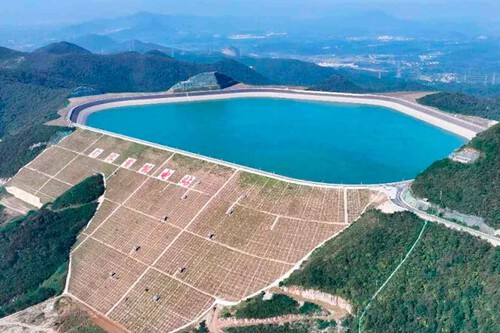 CHINA HA RECONSTRUIDO UNA PRESA COLOSAL DEL TAMAÑO DE UN RASCACIELOS
- Se trata de la más grande que existe en una central de bombeo, vital para que sus megaciudades tengan electricidad
- Con dos embalses con la capacidad de 6.800 piscinas olímpicas y una presa de más de 180 m de altura, equivalente a un rascacielos de 60 pisos
- Es clave para estabilizar la red y almacenar energía renovable, surtiendo de energía a ciudades de alta demanda como Shanghái o Hangzhou
En el este de China se concentran sus mastodónticas ciudades, como Shanghái, Nankín o Hangzhou. Es el corazón industrial y económico del país, y alberga más de una quinta parte de la población de la República Popular. Esto la convierte en la zona que más energía consume de todo China. Pero los principales centros de generación renovable se encuentran a miles de kilómetros, en el norte y el oeste.
En este contexto, la central de bombeo de Jùróng recién inaugurada y que ya opera a total rendimiento, es clave para almacenar electricidad y estabilizar la red en una zona tan exigente. No es una cualquiera: tiene la presa más alta del planeta para este tipo de instalaciones. Es tan elevada como un rascacielos de 60 pisos, erigiéndose más de 182 metros.
La batería que sostiene al este de China
Se trata de la central de bombeo Zhenjiang / Jurong Pumped Storage Power Station, ubicada en el delta del río Yangtsé en la provincia de Jiangsu. La semana pasada entró en pleno funcionamiento y se ha convertido en el principal gestor de energía limpia para esta región.
Números de récord. Además de que la presa del embalse superior firma 182,3 m de altura y que no hay otra más elevada en toda la faz de la Tierra, tiene otras cifras mareantes. Sus dos embalses almacenan 17,07 millones m³ de agua, equivalente a 6.800 piscinas olímpicas.
Su capacidad instalada total es de 1,35 millones de kilovatios (1.350 MW), y su generación anual estimada alcanza los 13.500 millones de kilovatios-hora, fruto de su funcionamiento como sistema de almacenamiento por bombeo. Así, puede cubrir una gran parte de la demanda diaria en Jiangsu. Provincia que este verano registró un récord en consumo de electricidad: 156 millones de kilovatios, más de un 6 % más que el de 2024.
«A pleno funcionamiento, proporcionará aproximadamente 2,7 millones de kilovatios de capacidad de regulación de potencia bidireccional, aliviando la presión de la demanda máxima en la red eléctrica y mejorando la integración de nuevas fuentes de energía», presumió Wang Chenhui, director del Departamento de Desarrollo de State Grid Zhenjiang Power Supply Company.
Además, se vanagloria de otros hitos técnicos, como el uso de materiales impermeabilizantes pioneros en la enorme presa o nuevos sistemas de elevación para válvulas esféricas de gran tamaño. Avances que podrían replicarse en otras instalaciones para zonas densamente pobladas, pero con escasa producción de energía.
Una pieza clave para renovables. Una central de bombeo, también llamada planta de almacenamiento hidroeléctrico por bombeo, es una suerte de «batería hidráulica». Su objetivo es almacenar energía moviendo agua entre dos embalses situados a distinta altura. En horas de baja demanda, utiliza el excedente de energía para bombear agua hacia el embalse superior, acumulando energía potencial. En picos elevados de consumo, el sistema libera el agua hacia el embalse inferior, haciendo que pase por las turbinas y genere electricidad.
Por eso es vital para esta región que tanta energía demanda y consume, donde la estabilidad del suministro es crítica. Y a su vez es un gigantesco «pulmón energético» de energía renovable, que ya tiene una penetración de más de la mitad de la electricidad generada en China.
Además de aliviar picos de carga, facilita la integración de nuevas instalaciones fotovoltaicas y eólicas, cuya generación eléctrica es intermitente, y permitiendo así que no se desperdicie la energía generada. En China hay cerca de 80 instalaciones de bombeo ya activas, y se están convirtiendo en una pieza fundamental del sistema eléctrico del país.
CHINA HAS BUILT A COLOSSAL DAM THE SIZE OF A SKYSCRAPER: THE LARGEST PUMPED-STORAGE DAM IN EXISTENCE, VITAL FOR ITS MEGACITIES TO HAVE ELECTRICITY
- With two reservoirs with the capacity of 6,800 Olympic-sized swimming pools and a dam over 180 meters high, equivalent to a 60-story skyscraper
- It is key to stabilizing the grid and storing renewable energy, supplying power to high-demand cities like Shanghai and Hangzhou
Eastern China is home to its mammoth cities, such as Shanghai, Nanjing, and Hangzhou. It is the industrial and economic heart of the country and houses more than a fifth of the population of the People’s Republic. This makes it the area that consumes the most energy in all of China. But the main renewable energy generation centers are located thousands of kilometers away, in the north and west.
In this context, the newly inaugurated Jùróng pumped-storage hydroelectric plant, already operating at full capacity, is key to storing electricity and stabilizing the grid in such a demanding region. It’s not just any plant: it boasts the tallest dam in the world for this type of facility. As high as a 60-story skyscraper, it rises to over 182 meters.
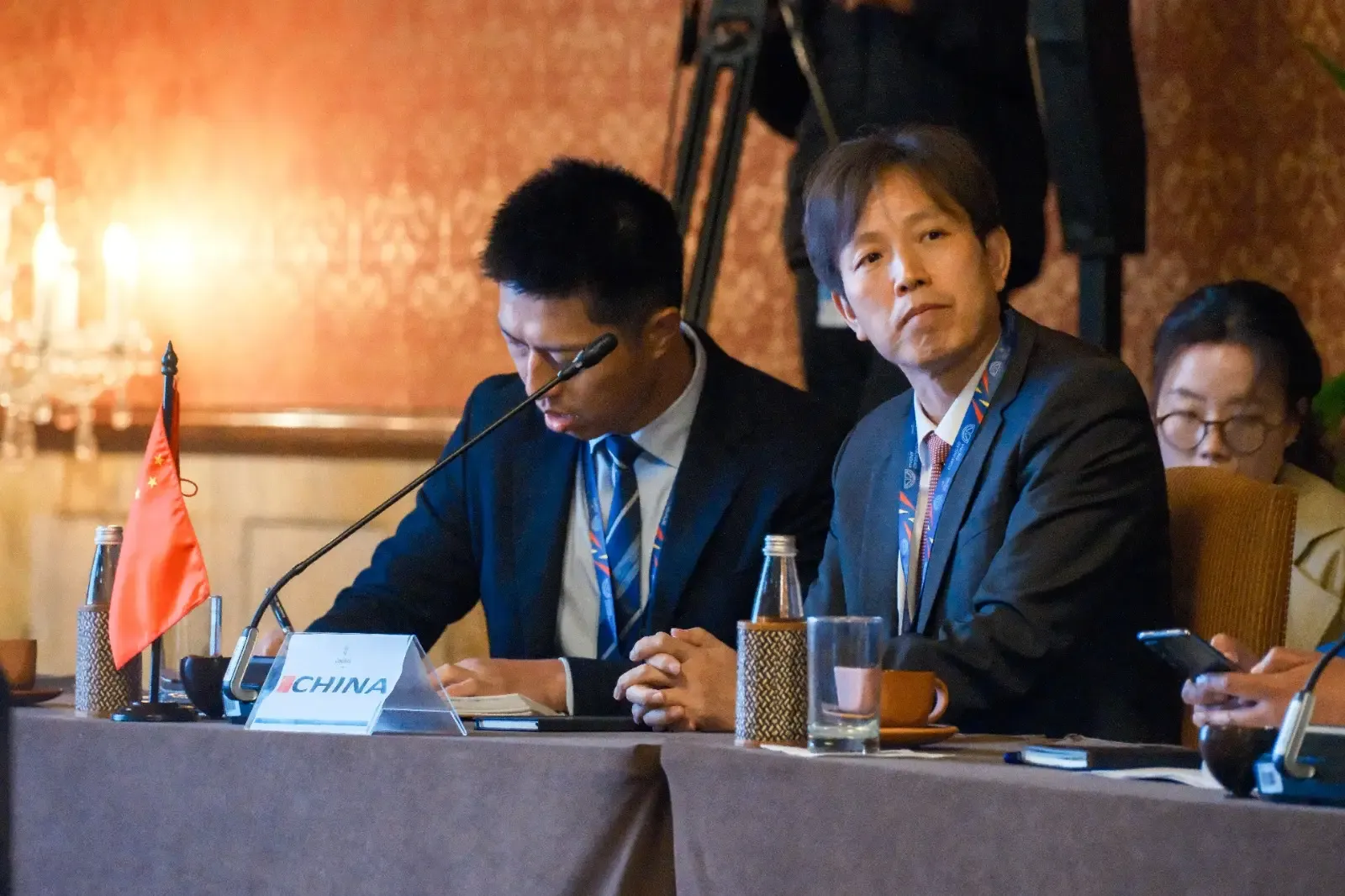 CHINA OBTIENE ESTATUS DE OBSERVADOR EN EL BLOQUE ANDINO, EXPANDIENDO SU DIPLOMACIA EN AMÉRICA LATINA
A finales de septiembre de 2025, la Comunidad Andina (CAN) otorgó a China el estatus de observador, lo que representa el último avance diplomático de Pekín en un organismo subregional de América Latina y el Caribe.
El acceso a la CAN se inscribe en una tendencia más amplia de la diplomacia china en la región, que va más allá de la cooperación con los gobiernos centrales. Actualmente, los diplomáticos chinos buscan participar en todos los niveles, estableciendo contactos con autoridades locales —ciudades, pueblos y provincias—, así como con organizaciones regionales y subregionales, tejiendo una compleja red de relaciones diseñada para fomentar tanto las alianzas entre Estados como los vínculos entre pueblos.
La decisión de la CAN ofrece una clara perspectiva de cómo China está profundizando su presencia en América Latina, no solo como socio comercial, sino como un actor diplomático proactivo y versátil.
La Comunidad Andina
Establecida en 1969, la CAN busca la integración económica, política y social entre sus estados miembros —Bolivia, Colombia, Ecuador y Perú— y cuenta con varios países sudamericanos, entre ellos Argentina, Brasil, Chile, Paraguay y Uruguay, como miembros asociados.
CHINA WINS OBSERVER SEAT IN ANDEAN BLOC, EXPANDING ITS LATIN AMERICAN DIPLOMACY
In late September 2025, the Andean Community (CAN, for its acronym in Spanish) granted observer status to China, marking Beijing’s latest diplomatic advance into a sub-regional body of Latin America and the Caribbean.
Access to the CAN is part of a broader trend of Chinese diplomacy in the region, which is evolving beyond cooperation with central governments. Nowadays, Chinese diplomats are eager to engage at all levels, reaching out to local authorities — cities, towns, and provinces — as well as regional and sub-regional organizations, weaving a complex network of relationships designed to foster both state-to-state partnerships and people-to-people connections.
The CAN’s decision offers a clear window into how China is deepening its presence across Latin America, not just as a trade partner but as a proactive and versatile diplomatic actor.
The Andean Community
Established in 1969, the CAN seeks economic, political, and social integration among its member states — Bolivia, Colombia, Ecuador, and Peru — and counts several South American countries, including Argentina, Brazil, Chile, Paraguay, and Uruguay, as associate members.
The CAN is part of the ‘integration phenomenon’ of the Americas, which spans the region from North to South, all over the continent – including the Caribbean – with as many integration efforts and multilateral bodies as the number of states in the region.
In the case of South America, there are at least four integration efforts based on geographical lines: the CAN, MERCOSUR, UNASUR, and PROSUR. Membership overlaps are common, with most countries participating in multiple organizations as full, associate, or observer members.
This phenomenon has led to the fragmentation of the continent into different sub-regions and integration efforts, which allows extra-regional actors to be very selective and strategic whenever engaging with these sub-regional bodies.
The Battle for Multilateral Spaces
For many years, Latin America and the Caribbean have remained an important theater in the competition for diplomatic recognition between Beijing and Taipei. This competition has been largely settled since 2023, when China displaced Taiwan from the Central American Parliament, following successive recognitions by Panama (2017), El Salvador (2018), the Dominican Republic (2018), Nicaragua (2021), and Honduras (2023).
Nonetheless, although few, Taiwan’s allies – most notably Paraguay and Guatemala – remain staunchly committed to defending Taipei’s presence in certain regional forums while working to block Beijing’s entry.
Paraguay, in particular, plays a crucial gatekeeping role. As a full member of MERCOSUR, UNASUR, and PROSUR, Asunción’s consensus-based veto effectively prevents China from joining those bodies.
In that last regard, Paraguay – a full member of MERCOSUR, UNASUR and PROSUR – remains one of the most important obstacles for China acceding to them, as the rule of consensus grants Asunción an effective veto power over such possibility.
The CAN, however, is a rare exception: Paraguay is only an associate member, limiting its ability to obstruct China’s participation.
The CAN’s Importance for China
Beyond diplomatic symbolism, the CAN offers Beijing a platform to advance its strategic interests in the region. In recent years, China has cultivated strong bilateral ties with all four CAN members, making collective engagement with the bloc a logical next step.
Of all, the most recent one to cozy up to China has been Colombia. As signaled by President Petro, Bogota is rethinking its partnership with Washington and may be open to an alternative with Beijing. In fact, recent tensions in the bilateral relationship between Colombia and the U.S. may have just provided the adequate push for Colombia not to veto China’s observer status at the CAN.
In the case of Ecuador, Beijing granted an economic lifeline to Quito in 2025, which adds up to years of economic engagement.
In Peru, the flagship Chancay Port, a cornerstone of the Belt and Road Initiative, continues despite political instability and the removal of President Dina Boluarte.
Lastly, we have Bolivia, whose current government has more than 20 years of close engagement with Beijing. Although not the result that China wanted, the election of Rodrigo Paz grants Beijing some breathing room – as the runner up Horacio Quiroga was the one openly calling for scraping the lithium extraction deals.
As long as China is willing to negotiate and concede by reaching a modus vivendi with President Paz, some of its lithium extraction plans may be able to survive. To this end, the CAN observer status may have come at the perfect time and could prove to be a valuable tool for diplomatic engagement.
China’s Multi-level Diplomacy
The CAN’s composition — four states, each with close but distinct ties with Beijing — exemplifies the multifaceted nature of China’s regional influence. Its engagement spans geopolitical (Colombia), economic (Ecuador), infrastructural (Peru), and energy (Bolivia) dimensions.
In that same vein, China’s diplomatic engagement with such countries is also as diverse as it gets, not limited to the traditional bilateral and multilateral levels.
Crucially, this diplomacy is not confined to national capitals. Through sister-city partnerships and twinning agreements, Chinese diplomats engage directly with local governments — a level of outreach that Western powers like the U.S. or U.K., and even Japan or South Korea, often overlook. For China, these decentralized relationships are central to its global strategy.
At the multilateral level, China’s approach also extends beyond the headline-grabbing forums such as the Organization of American States or the China-CELAC Forum. Sub-regional bodies like the Central American Parliament and, now, the Andean Community, play a key role in advancing Beijing’s goal of embedding itself in the institutional fabric of Latin America and the Caribbean.
The Fourth Joint Plan of Action of the China-CELAC Forum explicitly highlights this ambition — promoting exchanges “at all levels,” including regional, sub-regional, and legislative. China’s new observer role at the CAN is a tangible expression of that plan in action.
Published twice per week by Nuevo Poder. Articles and op-eds focusing on geopolitical issues around Indo-Pacific area
Editor: LW, senior fellow of REDCAEM and CESCOS
Submit contributions (that can be read with ease and pleasure), to ilwb@email.cz