En los últimos años, pocos temas de relaciones internacionales han recibido tanta atención como una posible invasión china de Taiwán. Y con razón: China nunca ha renunciado a sus derechos sobre la isla; se encuentra en medio de una de las mayores acumulaciones militares de la historia; realiza incursiones regulares en el espacio aéreo y las zonas marítimas de Taiwán; y su presidente, Xi Jinping, ha ordenado a sus líderes militares que desarrollen la capacidad de conquistar Taiwán para 2027 si así lo ordena, según altos funcionarios del gobierno estadounidense.
Para cualquiera que dude de que un ataque de este tipo pueda ocurrir en el siglo XXI, la invasión rusa de Ucrania en febrero de 2022 fue un duro recordatorio de que las grandes guerras territoriales no son cosa del pasado.
El presidente ruso, Vladímir Putin, aprovechó lo que consideró una oportunidad para recuperar lo que consideraba un territorio rebelde que se le estaba escapando. Tarde o temprano, Xi podría intentar hacer lo mismo.
Otros factores también han contribuido a la creciente ansiedad sobre el futuro de Taiwán. Pocos dudan de que China intentaría usar la fuerza para apoderarse militarmente de Taiwán si considerara que se han agotado todas las demás opciones para evitar la separación permanente, pero Pekín preferiría tomar el control pacíficamente, con la economía, la tecnología y el capital humano de la isla intactos.
Nobody Lost Taiwan : The Island Remains Secure and Stable—for Now
Over the past several years, few topics in international relations have gotten more attention than a possible Chinese invasion of Taiwan. And for good reason: China has never given up its claim to the island; it is in the middle of one of the largest military buildups in history; it conducts regular incursions into Taiwan’s airspace and maritime zones; and its president, Xi Jinping, has directed his military leadership to develop the capacity to conquer Taiwan by 2027 should he give the order to do so, according to senior U.S. government officials. For anyone skeptical that such an attack could take place in the twenty-first century, Russia’s invasion of Ukraine in February 2022 was a sharp reminder that major war over territory is not a thing of the past. Russian President Vladimir Putin seized what he thought was an opportunity to take back what he considered a wayward territory that was slipping away. Sooner or later, Xi could very well try to do the same.
Other factors have also contributed to growing anxiety about Taiwan’s future. Few doubt that China would try to use force to seize Taiwan militarily if it felt all other options to prevent permanent separation had been exhausted, but Beijing’s strong preference would be to take it over peacefully—with the island’s economy, technology, and human capital still intact. To achieve that goal, China is using a combination of relentless propaganda, infiltration, and military pressure to undercut U.S. support for Taiwan and to persuade Taiwan’s residents that they have little choice but to accept a political accommodation that recognizes Taiwan as part of China’s sovereign territory.
The past two months have produced growing concerns that Beijing is making progress on this front. Taiwan’s politicians have inflamed partisan divisions with rhetoric accusing one another of undermining Taiwan’s security, Taiwan’s ruling party pushed a failed “recall” of opposition members that deeply divided the population, and President Lai Ching-te’s popularity is collapsing. Taiwan’s dealings with the United States, meanwhile, have become trickier. The Trump administration has refused Lai’s routine transit through the United States, postponed efforts to reach a trade deal with Taiwan, halted some planned arms deliveries, and expressed harsh criticism about Taiwan’s defense spending. Washington has also loosened high-tech export controls on China, which suggests that President Donald Trump puts a higher priority on reaching a trade deal and improving relations with Beijing than on steadfast support for Taiwan. The pessimism about Taiwan’s future was best exemplified in August, when an article by a former Trump administration official went viral in Taiwan. It was called “How Taiwan Lost Trump.”
Concerns about Taiwan’s future are understandable—but they are also overblown. Unlike many other U.S. partners that are worried about their futures, Taiwan has valuable cards to play. It is far less divided internally than its rough-and-tumble politics might suggest, and its democracy and civil society are robust. It is also home to the world’s most advanced technologies, and its economy remains strong and resilient. Precisely because of those strengths, the island is finally making progress on the defense reforms and increased expenditures that will reduce its vulnerabilities to China even if U.S. support diminishes. If Taiwan plays those cards right, it can continue to prosper—and thwart Chinese military or political designs.
No one should underestimate the military threat Beijing poses to Taiwan, and few in Taiwan do. Especially since the summer of 2022, when then Speaker of the U.S. House of Representatives Nancy Pelosi visited Taiwan, China has been establishing what experts call a “new normal” in the Taiwan Strait. This has included more frequent air and naval crossings over the centerline of the strait, multiple live-fire encirclement exercises to simulate a blockade scenario, unprecedented missile tests over the island, and regular intrusions of Taiwan’s air defense identification zone. Meanwhile, and in large part to deter the United States from getting directly involved in a conflict over Taiwan, Beijing has acquired more hypersonic and antiship missiles as well as ballistic missiles, doubled its nuclear weapons inventory over the past five years, and dramatically increased the size and capability of its navy.
But Taiwan has not been standing still. Over the past several years, Taiwan’s political and military leadership has agreed to an asymmetric defensive strategy and aligned the Taiwanese military’s doctrine, force structure, and spending decisions around it. Largely gone are the days of overinvesting in expensive, high-end military capabilities to confront Chinese forces at the centerline of the Taiwan Strait. Now, Taiwan is concentrating resources on making the island the equivalent of a porcupine—prickly to touch and impossible to swallow. Taiwan’s defense innovations are also being turbocharged by lessons drawn from Ukraine’s resistance to Russia. This includes launching a whole-of-society resilience campaign, simulating realistic scenarios of Chinese military attacks in defense training, expanding public participation in civil defense, and simulating responses to cyberattacks and gray-zone threats. In 2022, Taiwan formed the All-Out Defense Mobilization Agency to better integrate reserve forces for defense. Taiwan’s defense leaders also are training and empowering field commanders to take initiative rather than wait for centralized directives.
Taiwan is retiring legacy systems, such as Cold War–era fighter jets and tanks, and instead deploying a variety of modern capabilities, such as HIMARS multiple-launch rocket systems and NASAMS 3 air defense systems, which have been effective in Ukraine. American companies and Taiwanese entities also are pursuing novel new partnerships to marry American defense innovation with Taiwan’s world-class advanced manufacturing. Joint arms production is rapidly expanding. Advanced defense technology firms are working with Taiwan to expand the island’s access to cutting-edge capabilities, such as loitering munitions, sea mines, unmanned aerial systems, unmanned surface vehicles, unmanned underwater vehicles, and electronic warfare and communications equipment. There also is consensus across Taiwan’s political spectrum to increase defense spending: Lai has pledged to lift defense spending to more than three percent of GDP next year and more than five percent by 2030.
Concerns about Taiwan’s future are understandable—but they are also overblown.
Taiwan must follow up on these pledges, and further reforms are needed, with more urgency, to consolidate its defense preparedness. But it is moving in the right direction.
The United States and its partners also have taken steps to thwart China’s military designs on Taiwan. In recent years, Washington has, for the first time, provided military aid to Taiwan by drawing directly from existing U.S. weapons stockpiles—a method previously reserved for urgent support to allies in active conflict. And it has authorized Taiwan for foreign military financing, which provides grants and loans so Taiwan can purchase American-made defense equipment. The United States and its partners—including Australia, Japan, the Philippines, Singapore, and Vietnam—are also advancing a “dispersal strategy” across the Pacific to support power projection from multiple sites, and the United States is pre-positioning munitions and other asymmetric capabilities at bases across the region to augment deterrence. Many of these regional partners are also building up their own advanced force projection capabilities and working more closely with Taipei on upholding freedom of navigation and maritime security.
Finally, for all Beijing’s formidable and growing military strength, it still confronts important internal challenges. Many of China’s top military officials have been purged during Xi’s third term on charges of corruption or disloyalty. As Jonathan Czin and John Culver have written in Foreign Affairs, Xi does not have the military he wants and does not seem to trust that the military he has would deliver on his directives.
A New Equilibrium
Taiwan is also better prepared for a Chinese infiltration campaign than many realize—including those in Beijing. China is devoting considerable resources to influence public opinion in Taiwan, including through cyberattacks, propaganda, acquisitions of Taiwanese media companies, and the use of social media platforms such as TikTok—all of which are designed to co-opt Taiwan residents with sympathies toward Beijing to promote eventual unification. China’s goal is to induce the people of Taiwan to conclude that resistance is futile and thus consent to unification. But there is little evidence that these efforts are working.
The reason is simple. Very few people in Taiwan are susceptible to Chinese propaganda. Even as they are divided along partisan lines, Taiwan’s public is unified and consistent in its strong opposition to communism and its desire to protect Taiwan’s sovereignty and democratic norms. In fact, the more aggressive Beijing has become toward Taiwan, the more Beijing has repelled rather than attracted the people of Taiwan. As Lev Nachman and Wei-Ting Yen wrote in Foreign Affairs, “Many of Beijing’s efforts to scare Taiwanese citizens invoke more cringe than panic.”
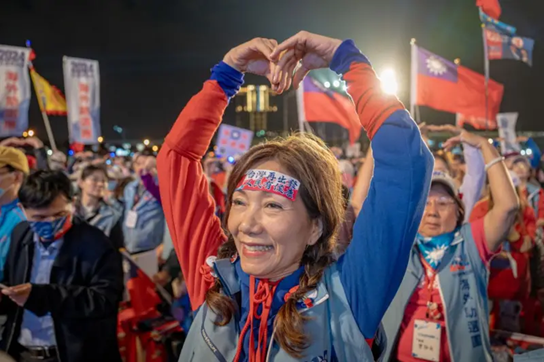
According to recent public opinion polls, over 90 percent of people in Taiwan feel either “Taiwanese” (63 percent) or “both Taiwanese and Chinese” (30 percent) as opposed to less than five percent who feel “Chinese.” The vast majority support upholding the cross-strait status quo, compared with less than eight percent who want unification with China “as soon as possible” (two percent) or even eventually (six percent), leaving Beijing little to work with. There is no doubt that Chinese efforts at infiltration combined with military pressure—such as cyberattacks or a naval blockade under the guise of customs enforcement—would be a major challenge to Taiwan, but such measures could just as easily foment hostility toward Beijing as weaken Taiwanese resolve.
The degree of polarization in Taiwanese politics can also be exaggerated. There are examples of troubling rhetoric, including Lai’s recent reference to hammering “impurities” out of Taiwan’s political system and an opposition politician’s comparison of some of Lai’s actions to “those of Nazi Germany.” But take a step back and Taiwan’s politics appear rather consensual on the big issues. None of Taiwan’s three main political parties—Lai’s Democratic Progressive Party, the opposition Kuomintang, and Taiwan People’s Party—support unification with Beijing. All are pro-democracy and anticommunist, all want to maintain ties with the United States, and none support immediate independence. The main distinction among the parties is over how best to preserve the cross-strait status quo, not whether to do so. The three parties agree on virtually all domestic issues, with the exceptions of nuclear energy and the death penalty. On most issues, their differences are more about personalities than ideology.
Compared with Taiwan’s past and other advanced democracies today, Taiwan’s politics are rather tame. Far from descending into deepening partisan divisions, Taiwan may be moving toward a new political equilibrium. Leaders of all three major parties acknowledge that they will need to compromise to move forward a special defense budget, which they all view as critical for Taiwan’s security. There also appears to be a cross-partisan consensus that now is not a time to test global tolerance for Taiwan’s independence but rather a moment to show Taiwan as a contributor to regional stability.
A Winning Hand
Given the stakes for Taiwan, which are nothing short of existential, complacency is not an option. To sustain its way of life in the face of China’s rapidly expanding national power, Taiwan’s leaders will need to act with urgency and shared purpose to shore up vulnerabilities. A path remains open for them to do so.
First and most important, Taiwan’s leaders will need to adequately resource their national defense and resilience. This will require compromise among leaders who prioritize raising compensation for career soldiers and extending the service of conscripts and those who favor fielding new military capabilities. Taiwan also will need to make additional investments in mobile strike weapons, such as mobile rocket launchers, man-portable air defense missiles, and air defense systems. Small, expendable unmanned systems and mines could add a critical layer of defense while redundant communication networks and hardened cybersecurity infrastructure will bolster resilience. Pre-positioning munitions, as well as stockpiles of energy, medical, and food supplies, also could help disabuse Chinese leaders of the notion that Taiwan can be taken quickly and cheaply. All these steps are not only critical to Taiwan’s ability to defend itself but also will help shield Taiwan from U.S. criticism that it is not pulling its own weight.
Taiwan also has an advantage that virtually every other American partner could only wish for: its economic strength, which can serve as the foundation for national security. By producing roughly 95 percent of the world’s most advanced semiconductor chips, Taiwan’s companies enjoy a monopoly position in the world economy. With the AI revolution taking off, Taiwan’s centrality to global markets will only grow. This gives Taiwan the fiscal space to steadily increase defense spending and present it as a win for Trump.
Given the existential stakes for Taiwan, complacency is not an option.
It also means leading companies such as Taiwan Semiconductor Manufacturing Company can make investments in the United States that the Trump administration wants without compromising its competitive position. Even with major investments in plants in Germany, Japan, and the United States, TSMC’s facilities in Taiwan still produce between 80 and 90 percent of the company’s total chip output. There simply is no alternative anywhere in the world to the leading-edge chips that Taiwan’s top companies produce. This means the United States will have an abiding interest in Taiwan’s security for many years to come, even if the traditional democratic underpinnings of the U.S.-Taiwanese relationship continue to weaken under Trump’s transactional presidency.
TSMC’s dominance of the global chip market creates a position of strength for Taiwan that other countries can only envy. When word got out that the Trump administration was thinking of demanding part ownership of technology companies that take U.S. subsidies (as it did for Intel), TSMC made clear it would rather forgo the subsidies than dilute its ownership—and Trump backed down. When the time comes to finalize a U.S.-Taiwanese trade and tariff deal, TSMC’s investments in the United States will provide leverage to Taiwan.
In short, by increasing defense spending, investing in the United States, and making a case that Taiwan is a steady partner in sustaining peace and stability in a key global hotspot, Taiwan has strong cards to play in managing relations with Trump. None of this, of course, provides a foolproof hedge against the risk of Trump making concessions on Taiwan in exchange for a trade deal or a better relationship with Xi. Successive Chinese leaders have sought and failed to get American leaders to take such a deal. Xi almost certainly will try to do so with Trump when they meet as planned this fall. He could ask Trump for commitments to reduce arms sales to Taiwan or to make clear officially that the United States opposes Taiwan’s independence and supports eventual unification—and Trump might be tempted to do so to get the deal he covets.
But even in this scenario, Taiwan still retains significant agency and ample resources to shape its own future. Taiwan faces serious threats from China, growing uncertainty from Washington, and internal divisions. But there is every reason to believe that its leaders and people are well placed, if they make the right choices, to ensure it continues to not just survive but thrive. (Philip H. Gordon and Ryan Hass)
JAPÓN Y FILIPINAS EN EL TABLERO DE SEGURIDAD DEL INDO-PACÍFICO
 La consolidación de la cooperación en seguridad entre Japón y Filipinas a través del Reciprocal Access Agreement (RAA) constituye un punto de inflexión en el orden del Indo-Pacífico. Firmado en julio de 2024 y ratificado por ambos parlamentos en 2025, el acuerdo permite el acceso recíproco de fuerzas militares, facilitando ejercicios conjuntos y programas de fortalecimiento de capacidades. Más allá de lo técnico, el pacto refleja la necesidad urgente de ambos países de responder a una China cada vez más asertiva en los mares del Este y del Sur. Como expresó el secretario de Defensa filipino Gilberto Teodoro, el RAA “garantiza que Filipinas tenga socios confiables en la defensa de la ley internacional y la estabilidad regional”
En una perspectiva más amplia, el RAA consolida lo que algunos académicos denominan una “cuasi-alianza”. El acuerdo sitúa a Japón y Filipinas como potencias medias que navegan la competencia entre grandes potencias bajo la estrategia del Free and Open Indo-Pacific (FOIP). Esta posición es clave, dado que ambos buscan reducir la sobredependencia de las garantías militares estadounidenses y, al mismo tiempo, reforzar la disuasión colectiva. De este modo, las potencias medias comienzan a configurar la seguridad regional no como meros seguidores, sino como actores que fijan agenda. Al tiempo que muestra la disposición de Japón a dejar atrás su tradicional autocontención en la exportación de seguridad con la transferencia de destructores clase Abukuma, sistemas de radar y paquetes de entrenamiento evidencia una transformación profunda, ergo Japón pasa de ser un actor estrictamente pacifista a un proveedor activo de seguridad en el sudeste asiático, un escenario impensado hace apenas una década.
Las reacciones oficiales de los aliados refuerzan este diagnóstico. En una declaración conjunta, los ministros de Defensa de Australia, Japón, Filipinas y Estados Unidos expresaron su “seria preocupación” por las acciones desestabilizadoras en los mares regionales, y reafirmaron su compromiso con la Convención de las Naciones Unidas sobre el Derecho del Mar (CONVEMAR) y la libertad de navegación. Así, emerge una arquitectura de seguridad minilateral que trasciende el Tratado de Defensa Mutua entre EE. UU. y Filipinas, y que se cruza con marcos más amplios como el Quad y el AUKUS.
De cara al futuro
Sin embargo, persisten los desafíos. China ya denunció al RAA como una provocación y advirtió sobre contramedidas, mientras que algunos miembros de la ASEAN, como Camboya y Laos, lo consideran un factor de militarización. Para Manila, el riesgo es claro: convertirse en el frente de la competencia de grandes potencias supone beneficios en materia de disuasión, pero también costos si la escalada se traduce en un conflicto abierto. Para Tokio, el acuerdo pone a prueba los límites de su constitución pacifista y una opinión pública aún dividida sobre la profundización de compromisos militares externos.
En conclusión, el RAA entre Japón y Filipinas trasciende lo bilateral cristalizando la emergencia de una red de seguridad en el Indo-Pacífico donde las potencias medias asumen un papel más decidido. Refuerza la disuasión, aumenta la interoperabilidad defensiva y envía un mensaje claro sobre el valor del derecho internacional en aguas disputadas. No obstante, también plantea dilemas sobre la delgada línea entre disuadir y provocar. El desenlace dependerá tanto de la capacidad de Tokio y Manila de sostener su compromiso como de la reacción de Beijing y la habilidad de la ASEAN para articular una posición común. Lo indiscutible es que, por primera vez en décadas, el sudeste asiático se configura bajo la iniciativa de actores que antes preferían mantenerse al margen de la rivalidad de las grandes potencias.
JAPAN AND THE PHILIPPINES ON THE INDO-PACIFIC SECURITY CHART
The consolidation of security cooperation between Japan and the Philippines through the Reciprocal Access Agreement (RAA) constitutes a turning point in the Indo-Pacific order. Signed in July 2024 and ratified by both parliaments in 2025, the agreement allows for reciprocal access of military forces, facilitating joint exercises and capacity-building programs. Beyond the technical aspects, the pact reflects the urgent need for both countries to respond to an increasingly assertive China in the East and South Seas.
As Philippine Defense Secretary Gilberto Teodoro put it, the RAA “ensures that the Philippines has reliable partners in upholding international law and regional stability.”
More broadly, the RAA consolidates what some scholars call a “quasi-alliance.” The agreement positions Japan and the Philippines as middle powers navigating great power competition under the Free and Open Indo-Pacific (FOIP) strategy. This position is key, given that both seek to reduce overdependence on US military guarantees while simultaneously strengthening collective deterrence.
BILL GATES CONVENCE A HYUNDAI PARA UTILIZAR REACTORES NUCLEARES DE SODIO LÍQUIDO Y SAL FUNDIDA: ENERGÍA LIMPIA, SEGURA Y BARATA
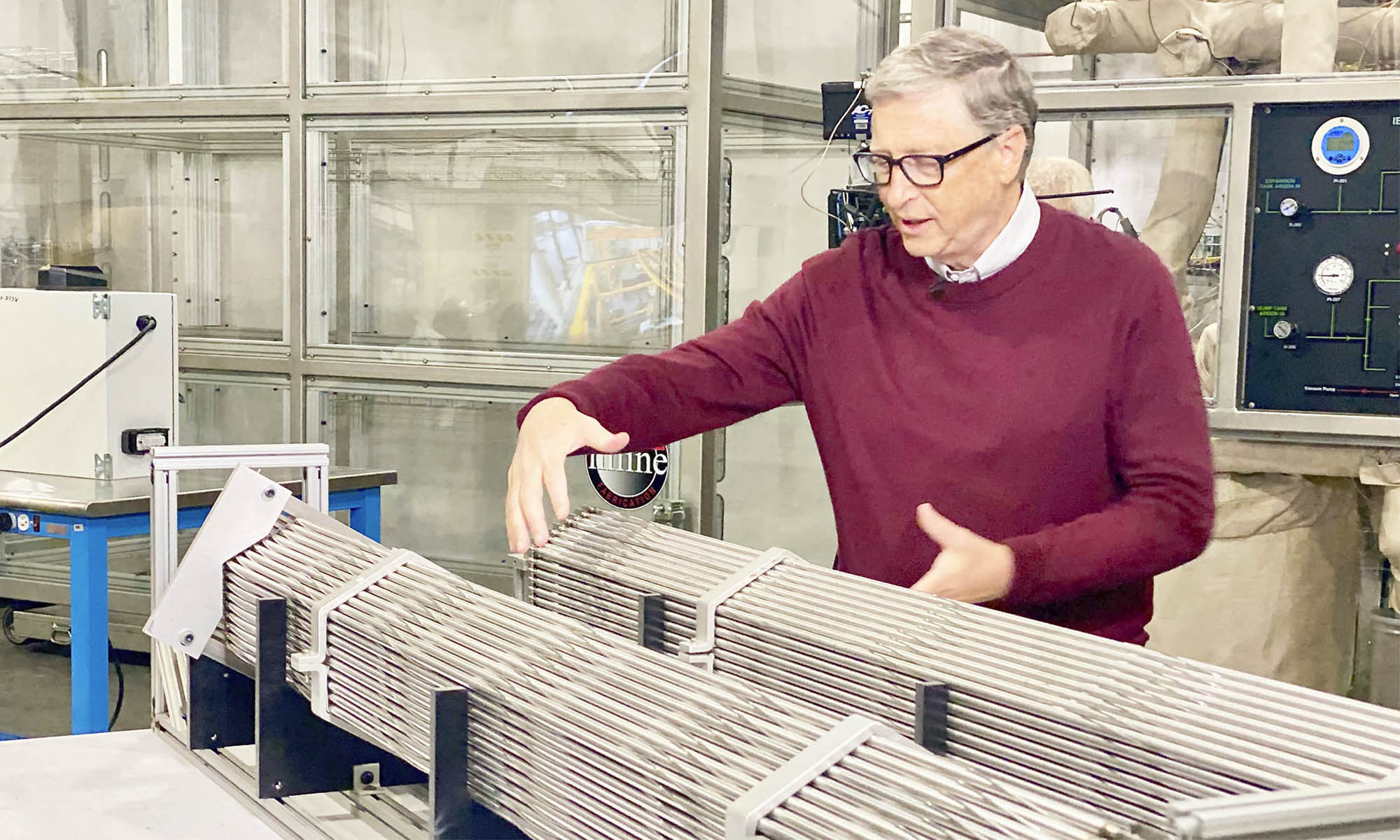 La alianza entre el magnate americano y el fabricante coreano supone una iniciativa innovadora que integra reactores nucleares SMR en barcos, marcando un hito en la descarbonización del transporte marítimo.
Bill Gates dio un paso relevante para llevar la energía nuclear avanzada a sistemas eléctricos más sostenibles y fiables. A través de TerraPower, y en alianza con Bechtel, impulsa el desarrollo de Natrium, un reactor de sodio líquido con capacidad de almacenamiento térmico que aspira a convertirse en un elemento fundamental para el despegue del coche eléctrico.
Natrium es un reactor modular de nueva generación que utiliza sodio líquido como refrigerante, diseñado para funcionar bajo estrictos estándares de seguridad y eficiencia. A diferencia de los reactores de agua a presión convencionales, elimina los riesgos vinculados a la sobrepresión o posibles explosiones. Su gran innovación es el sistema de almacenamiento de energía en sal fundida, con una capacidad de hasta 1 GWh, lo que facilita equilibrar la variabilidad de las energías renovables como la solar y la eólica.
La alianza con Hyundai
El transporte marítimo es responsable de alrededor del 3 % de las emisiones globales de CO₂, una cifra que lo coloca en el mismo nivel de contaminación que países enteros como Alemania o Japón. Hasta ahora, las soluciones más extendidas para reducir el impacto ambiental han sido el uso de gas natural licuado (GNL), el desarrollo de motores híbridos eléctricos, el amoniaco verde y los biocombustibles avanzados.
Sin embargo, ninguna de estas alternativas ha logrado ofrecer una combinación perfecta de autonomía, escalabilidad y coste competitivo para las rutas intercontinentales. Aquí es donde los SMR aparecen como una opción disruptiva: alta densidad energética, cero emisiones en la operación y una autonomía prácticamente ilimitada, ideal para buques de gran tonelaje que atraviesan océanos.
Bill Gates ha cerrado en Seúl un acuerdo estratégico con HD Hyundai, uno de los mayores astilleros del mundo. El objetivo de esta alianza es acelerar el desarrollo y la integración de reactores modulares pequeños (SMR) en buques de gran capacidad, un avance que podría cambiar las reglas del juego en el comercio internacional.
La reunión, celebrada el 23 de agosto entre Gates y Chung Kisun, vicepresidente ejecutivo de HD Hyundai, consolida un diálogo que comenzó en marzo en Estados Unidos. Ambos líderes coincidieron en la necesidad de reforzar las cadenas de suministro nuclear y de impulsar la industrialización de esta tecnología, considerada una de las más prometedoras para sustituir al fuelóleo pesado en el transporte de mercancías por mar.
Hyundai ya tiene en marcha el desarrollo de un portacontenedores de 15.000 TEU propulsado con SMR, un proyecto que ha recibido la aprobación preliminar de la sociedad de clasificación ABS (American Bureau of Shipping). Este respaldo supone un primer aval de seguridad y viabilidad, aunque el camino regulatorio y tecnológico aún es largo.
La compañía surcoreana se ha comprometido a invertir más de 200 millones de dólares en este proyecto, con el horizonte de ver los primeros buques nucleares en operación hacia 2030. Paralelamente, Hyundai estudia diseños complementarios: desde plataformas flotantes que alberguen barcazas nucleares hasta buques de mayor potencia (hasta 240 MW) capaces de producir hidrógeno verde en alta mar.
Según Chung Kisun, este movimiento puede convertirse en un “punto de inflexión en las cadenas de suministro globales”, permitiendo que el transporte marítimo avance hacia una independencia energética sin emisiones directas de carbono.
El papel de Bill Gates y TerraPower
El respaldo de Bill Gates llega a través de TerraPower, una empresa fundada por él mismo y especializada en reactores de cuarta generación, particularmente en reactores rápidos refrigerados por sodio. Esta tecnología busca superar las limitaciones de los reactores tradicionales: mayor seguridad, reducción de residuos radiactivos y capacidad de modular la producción energética según la demanda.
Chris Levesque, director ejecutivo de TerraPower, destacó que la capacidad industrial y de construcción naval de Hyundai es fundamental para llevar al mar esta tecnología. La colaboración, explicó, permitirá traducir la investigación en aplicaciones prácticas a gran escala, lo que hasta ahora había sido uno de los grandes retos del sector nuclear.
Los reactores modulares pequeños presentan varias ventajas sobre las centrales nucleares tradicionales:
- Su diseño estandarizado permite una fabricación en serie, reduciendo costes.
- Requieren menor espacio y pueden integrarse en buques de gran tamaño.
- Aportan flexibilidad energética, ya que pueden utilizarse no solo para propulsión, sino también para producir hidrógeno o alimentar redes eléctricas flotantes.
No obstante, el proyecto enfrenta a desafíos muy considerables. El principal es el marco regulatorio internacional: la legislación marítima y nuclear aún no contempla de forma clara el uso de reactores a bordo de buques comerciales. Además, existen dudas sobre la gestión de residuos, la seguridad en caso de accidentes y la aceptación social de la energía nuclear en un sector tan visible como el transporte marítimo.
Aunque se trata de un proyecto centrado en la navegación, sus implicaciones alcanzan también al ecosistema de la movilidad eléctrica terrestre. La capacidad de producir hidrógeno en alta mar podría nutrir cadenas de suministro de combustible limpio para camiones, autobuses y vehículos industriales. Asimismo, la estabilidad energética que ofrecen los SMR podría reforzar las redes eléctricas que hoy alimentan puntos de recarga para coches eléctricos.
De este modo, la apuesta de Gates y Hyundai no se limita al ámbito naval: puede convertirse en un eslabón clave de la transición energética global, con repercusiones directas sobre la movilidad eléctrica y la descarbonización de la economía.
BILL GATES CONVINCES HYUNDAI TO USE LIQUID SODIUM AND MOLTEN SALT NUCLEAR REACTORS: CLEAN, SAFE, AND CHEAP ENERGY
The alliance between the American magnate and the Korean manufacturer represents an innovative initiative that integrates SMR nuclear reactors on ships, marking a milestone in the decarbonization of maritime transport.
Bill Gates took a significant step toward bringing advanced nuclear energy to more sustainable and reliable electrical systems. Through TerraPower, and in partnership with Bechtel, he is promoting the development of Natrium, a liquid sodium reactor with thermal storage capacity that aspires to become a fundamental element in the takeoff of the electric car.
Natrium is a next-generation modular reactor that uses liquid sodium as a coolant, designed to operate under strict safety and efficiency standards. Unlike conventional pressurized water reactors, it eliminates the risks associated with overpressure or possible explosions. Its major innovation is its molten salt energy storage system, with a capacity of up to 1 GWh, which makes it easier to balance the variability of renewable energies such as solar and wind.
Indo-Pacific Monitor® is published weekly by Nuevo Poder as outlet focusing on geopolitics around this area.
Editor: IW, senior fellow of REDCAEM and CESCOS
Please submit contributions (that can be read with ease and pleasure) to ilwb@email.cz