Los nueve Estados con armas nucleares (China, Corea del Norte, EEUU, Francia, India, Israel, Pakistán, Reino Unido y Rusia) prosiguieron en 2024 con sus programas de modernización de su arsenal nuclear. Las capacidades nucleares de China crecen más rápido que las de cualquier otro país, con unas 100 nuevas ojivas al año desde 2023. El informe anual del SIPRI advierte que está surgiendo una peligrosa carrera armamentista nuclear en un momento en que los regímenes de control de armamentos están muy debilitados. El gasto militar global roza por décimo año consecutivo en 2024 los US$ 2,7 trillones liderado por los costos de la guerra Rusia-Ucrania y otros conflictos armado y tensiones geopolíticas.
Fuente: https://www.sipri.org/sites/default/files/2025-06/yb25_summary_en.pdf
SIPRI YEARBOOK 2025 (Summary)
SIPRI Yearbook 2025 presents a combination of original data in areas such as world military expenditure, international arms transfers, arms production, nuclear forces, armed conflicts and multilateral peace operations with state-of-the-art analysis of important aspects of arms control, peace and international security.
This booklet summarizes the contents of SIPRI Yearbook 2025 and provides samples of the data and analysis that it contains.
CONTENTS
Part I. International security and armed conflict, 2024
- International stability, human security and the nuclear challenge 2. Armed conflict and conflict management
Part II. Military spending and armaments, 2024
- Military expenditure
4. Arms production and military services
5. International arms transfers
6. World nuclear forces
7. Proliferation and use of missiles and armed uncrewed aerial vehicles
Part III. Non-proliferation, arms control and disarmament, 2024
- Nuclear disarmament, arms control, non-proliferation and security 9. Chemical weapons and security threats
10. Biological weapons and security threats
11. Conventional arms control and the regulation of inhumane weapons - Artificial intelligence and international peace and security
- Cyber and digital threats
14. Space security governance
15. Dual-use and arms trade controls
Global security continued to deteriorate throughout 2024. Markers of this persistent deterioration included major armed conflicts in Ethiopia, Gaza, Myanmar, Sudan and Ukraine. Military spending, meanwhile, rose for the 10th successive year and exceeded $2.7 trillion in 2024. Ecological disruption also continued, with 2024 being the first year on record in which the average global temperature was clearly more than 1.5°C above the pre-industrial average. New uncertainties arose in the first quarter of 2025 following the election of Donald J. Trump as president of the United States, which prompted a significant departure from previous US policy and assumptions about global security and relations with allies.
A new nuclear arms race?
The era of nuclear weapons reductions appears to have ended. Bilateral nuclear arms control between Russia and the USA entered crisis some years ago and is now almost over. Revitalized national debates in Europe, the Middle East and East Asia about nuclear status and strategy suggest there is some potential for more states to join the nuclear club. The signs are that a new qualitative nuclear arms race is gear- ing up and, compared with the last one, the risks are likely to be more diverse and more serious. Among the key points of com- petition will be technological capacities in cyberspace, outer space and ocean space. Thus, the idea of who is ahead in the race will be even more elusive and intangible,
and the old largely numerical formulas of arms control will no longer suffice.
Facing the challenge
With President Trump’s return to the White House, there is a repeat of the para- doxical situation experienced during his first administration, in which none of the three great powers is committed to defend- ing and upholding the world order. China, as a rising power, Russia, as a declining power, and the USA, as a profoundly dis- affected power under Trump, all seek free- dom from the constraints of agreed rules whenever they are inconvenient. One way forward is for medium and small powers to work together in coalitions with like- minded governments on specific goals. Cooperation is of value even when it is not comprehensive. It is a pragmatic, viable approach: the new realism.
A return to an era of reductions to the global nuclear arsenal, however, requires agreement among the three great powers. A new, general understanding is needed that nuclear weapons do not buy security and that their existence demands balanced behaviour by political leaders. Initial small steps towards reducing risk could form guardrails against disaster. Together with the voices of an informed public, they could also be part of building pressure on the three great powers to take the next steps in reducing their nuclear arsenals.
In 2024 the global armed conflict land- scape continued to deteriorate, with large- scale violence across multiple regions. Perhaps the most pronounced change in armed conflict since 2021 has been the return of extensive conventional interstate warfare in Europe and cross-border, state-led military aggression in the Middle East.
Although the number of locations of armed conflict fell slightly, from 51 states in 2023 to 49 in 2024, the estimated overall number of fatalities rose from 188 000 in 2023 to 239 000 in 2024.
This was the highest annual total in the period 2018–24 (the years for which consistent data is available). There were five major armed conflicts involving over 10 000 estimated conflict-related fatalities in 2024 (one more than in 2023): the Israel–Hamas and Russia–Ukraine wars, the civil wars in Myanmar and Sudan,
and the subnational armed conflicts in Ethiopia. The number of high-intensity
conflicts, with 1000–9999 estimated conflict-related fatalities, fell from 20 in 2023 to 19 in 2024. Outside of Europe, most wars continued to take place within states—or in clusters of states with porous borders—and to involve non-state armed groups. The international dimension remains key to many armed conflicts, with military intervention or substantial support often being provided to one or more of the warring parties by outside powers.
Europe
Europe had the highest level of conflict- related fatalities in 2024 (77 771), having been the region with the lowest annual level during 2018–21. Estimated conflict- related fatalities in Europe doubled between 2023 and 2024 as the Russia– Ukraine war increased in intensity. This included more clashes inside Russia and expansion beyond the supply of arms and assistance to each side by supporting states to the direct deployment of troops to Russia from the Democratic People’s Republic of Korea (North Korea). At the end of 2024, Russia controlled just under one fifth of Ukrainian territory. Russian air attacks continued through the year, and Ukraine replied in kind, although not on the same scale. There were no formal Russia–Ukraine peace talks in the course of 2024, but the re-election of Donald J. Trump as president of the United States was expected to lead to a re-evaluation of US policy towards the war in 2025.
The Middle East and North Africa
The human toll of the ongoing war in Gaza rose substantially in 2024, with over 45 500 Palestinians dead, 90 per cent of the population displaced and much of the area reduced to rubble by the end of the year. The war also spilled over on multiple fronts: violence in the West Bank rose to record levels; Israel launched a ground campaign against Hezbollah in Lebanon; the Iran–Israel conflict escalated beyond a proxy war to a series of direct exchanges of fire; and Israel’s actions also inadvert- ently contributed to the unexpected and rapid collapse of the government of Presi- dent Bashar al-Assad in Syria, taking the 13-year Syrian civil war into an uncertain endgame. The region’s other armed conflicts in Iraq, Libya, Türkiye and Yemen have reduced in intensity in recent years without reaching any sustainable resolutions.
Sub-Saharan Africa
Sub-Saharan Africa remained the region with the most armed conflicts (21), although many involved fewer tan 1000 conflict-related fatalities over the year and levels of violence fluctuated con- siderably. Between 2023 and 2024, there were notable decreases in conflict-related fatalities in some countries experiencing high-intensity armed conflict, including Burkina Faso (–12 per cent), Mali (–7.0 per cent), Somalia (–35 per cent) and South Sudan (–16 per cent). Other armed conflicts escalated, with increases in fatality rates in Ethiopia (+152 per cent) and Niger (+48 per cent). The civil war in Sudan accounted for nearly 24 per cent of all conflict-related fatalities in sub-Saharan Africa in 2024, despite a small year-on-year decline in the number of fatalities related to the war.
The Americas and Asia and Oceania
The Americas was the only region not to have had a major armed conflict in 2018–24. The two countries that suffered the highest number of fatalities in 2024— Brazil and Mexico—largely faced criminal rather than political violence. Gang violence escalated in Haiti during the year, despite the long-delayed arrival of inter- national security assistance in June. The conflict-related fatality rate for Asia and Oceania has more than halved since 2021, notwithstanding the civil war in Myanmar.
Peace processes
In 2024 there were a few noteworthy developments in peace processes designed to prevent the occurrence (or reoccurrence) of armed violence: China and India defused tensions along their disputed border; China and the Philippines set up a dispute- resolution process to improve their handling of maritime disputes; and Kyrgyzstan and Tajikistan resolved a long-standing border dispute. However, few peace processes linked to ongoing armed conflict advanced in 2024. While there was some further progress in South Sudan, there were set- backs for peace processes in Colombia, Ethiopia, the Philippines and Yemen.
Estimated global military expenditure rose for the 10th consecutive year in 2024, to reach $2.7 trillion, driven by the Russia– Ukraine war and other armed conflicts and geopolitical tensions. The 9.4 per cent increase in total military spending in 2024 pushed estimated world spending to the highest level recorded by SIPRI. As a result, the global military burden—world military expenditure as a share of world gross domestic product (GDP)—rose to 2.5 per cent. For countries with major or high- intensity armed conflicts in 2024 the average military burden was 4.4 per cent, compared with 1.9 per cent in countries with no such conflict.
Between 2015 and 2024, world military expenditure rose by 37 per cent and increased across all five geographic regions. The biggest increase was in Europe (+83 per cent), followed by Asia
and Oceania (+46 per cent), the Americas (+19 per cent), the Middle East (+19 per cent) and Africa (+11 per cent).
The United States remained by far the largest military spender in the world. Its expenditure of $997 billion in 2024 was 3.2 times more than the next biggest spender, China.
In 2024 military spending rose in all countries in Europe other than Malta as total European spending increased by 17 per cent. Spending went up in Russia (+38 per cent) and Ukraine (+2.9 per cent) during the year, while 17 of the 30 European members of the North Atlantic Treaty Organization (NATO) reached or surpassed the alliance’s 2.0 per cent of GDP spending guideline, with notable spending increases recorded by Romania (+43 per cent), the Netherlands (+35 per cent), Sweden (+34 per cent), Poland (+31 per cent) and Germany (+28 per cent).
In Asia and Oceania estimated military expenditure rose for the 35th consecutive year. Spending by China, which grew by 7.0 per cent to reach $314 billion in 2024, accounted for half of the regional total. Countries’ tensions with China influenced spending decisions across the region in 2024: in Japan, for example, spending went up by 21 per cent, the largest year-on-year spending increase since 1952.
Estimated military spending in the Middle East grew by 15 per cent in 2024, with increases in all three of the biggest spenders in the region: Saudi Arabia (+1.5 per cent), Israel (+65 per cent) and Türkiye (+12 per cent).
The SIPRI Top 100
The arms revenues of the 100 largest arms- producing and military services companies (the SIPRI Top 100) totalled $632 billion in 2023 (the most recent year for which data is available). This was 2.8 per cent higher than the revenues of the Top 100 for 2022. The year-on-year increase reflected the demand for military equipment and services driven by heightened global security concerns, ongoing conflicts and rising military budgets. Seventy-three of the companies in the Top 100 increased their arms revenues in 2023, including 39 that achieved double- digit annual growth. Given the persistence of demand and the size of companies’ backlogs, there are likely to be further increases in global arms revenues in the coming years.
The United States continued to domin- ate the Top 100 ranking, with 41 companies listed with total arms revenues of $317 billion. They accounted for half of total Top 100 arms revenues in 2023. The world’s top five arms companies in 2023—whose arms revenues made up nearly one third of the Top 100 total—were all based in the USA.
Nine Chinese companies were ranked in the Top 100 for 2023, with three among the top 10. Chinese companies’ combined arms revenues of $103 billion placed China second among countries with companies in the ranking, behind only the USA.
Due to a lack of available data, only two Russian companies were included in the Top 100 for 2023. Their combined arms revenues of $25.5 billion were 40 per cent higher than in 2022.
Mergers and acquisition trends
One of the defining trends of the North American and West European arms indus- tries in recent years has been a growing wave of mergers and acquisitions among companies, facilitated by low borrowing costs and increasing military procurement. The trend has been particularly pro- nounced in high-technology sectors, including those covering uncrewed aerial vehicles, electronic warfare and cyber capabilities powered by artificial intelli- gence. This reflects the Western arms industry’s shift towards advanced tech- nologies in response to the requirements of modern warfare and military priorities.
The volume of international transfers of major arms has remained relatively stable over the past 15 years. The volume of transfers in the five-year period 2020–24 was 0.6 per cent lower than in 2015–19 and 3.9 per cent higher than in 2010–14. The volume of transfers in 2020–24 was the second highest of any five-year period since the end of the cold war, but still around 35 per cent lower than the peak years during the cold war (1980–84).
The global trend since 2010–14 perhaps goes against expectations, coming at a time when armed conflicts and threat percep- tions in many parts of the world have intensified, resulting in widespread increases in arms procurement. Three key factors, among many others, have kept international arms transfers at around the same level over the past 15 years: long procurement cycles, expanding domestic arms production and economic constraints.
However, the stable overall trend masks a far more complex regional picture and there are indications, which became more visible in 2020–24, that the volume of international arms transfers will grow in the coming years.
Conflicts, tensions and arms transfers
Armed conflicts and increasing interstate tensions are the main drivers of arms acquisitions for many states. Most of the largest recipients of major arms in 2020–24 used imported arms in military combat operations in that period. Many arms suppliers are direct stakeholders in at least some of the conflicts or are affected by related tensions. This partly explains why they are willing to supply arms, even when the transfers seem to contradict their stated arms export policies. Three non-state armed groups were identified as recipients of major arms in 2020–24, located in Lebanon/Palestine, Libya and Yemen.
SIPRI has identified 64 states as suppliers of major arms in 2020–24, but most are minor suppliers. The 25 largest suppliers accounted for 98 per cent of the total volume of exports, and the top five—the United States, France, Russia, China and Germany—accounted for 71 per cent.
The USA’s arms exports grew by 21 per cent between 2015–19 and 2020–24, increasing its share of global arms exports from 35 to 43 per cent. Known plans for deliveries of major arms over the next few years strongly indicate that the USA will remain unchallenged as the world’s largest arms supplier for the foreseeable future— a position leading to anxieties of depend- ence for some of its main clients and allies. In contrast, Russia’s arms exports halved between 2015–19 and 2020–24 to a level far below any previous five-year period in its history (or in any previous five-year period since 1950 for its predecessor, the Soviet Union). Exports by France rose by 11 per cent between 2015–19 and 2020–24, making France the second largest supplier of major arms in 2020–24.
Recipients of major arms
SIPRI has identified 162 states as recipients of major arms in 2020–24. The five largest arms recipients were Ukraine, India, Qatar, Saudi Arabia and Pakistan, which together accounted for 35 per cent of total arms imports. Ukraine’s arms imports increased nearly 100 times over compared with 2015–19, with at least 35 states delivering major arms, mostly as aid.
China, for decades among the top arms recipients, saw arms imports fall by two thirds between 2015–19 and 2020–24 as it continued to expand its domestic arms production capabilities.
The region that received the largest volume of transfers of major arms in 2020–24 was Asia and Oceania. States in Asia and Oceania accounted for 33 per cent of all global arms transfers, followed by those in Europe (28 per cent), the Middle East (27 per cent), the Americas (6.2 per cent) and finally Africa (4.5 per cent). Between 2015–19 and 2020–24, the flow of arms to Europe increased by 155 per cent, reaching a level far higher than in any of the six preceding five-year periods. The flow to the Americas also increased (+13 per cent), while flows to Africa (−44 per cent), Asia and Oceania (−21 per cent) and the Middle East (−20 per cent) decreased.
At the start of 2025, nine states—the United States, Russia, the United Kingdom, France, China, India, Pakistan, the Democratic People’s Republic of Korea (North Korea) and Israel—together possessed approx- imately 12 241 nuclear weapons, of which 9614 were considered to be potentially operationally available. An estimated
3912 of these warheads were deployed with operational forces, including about 2100 that were kept in a state of high operational alert on ballistic missiles.
Overall, the number of nuclear warheads in the world continues to decline, due to the USA and Russia dismantling retired war- heads. However, the number of warheads being dismantled annually appears to be decreasing and it seems likely that the rate at which retired warheads are dismantled will soon be outpaced by the rate at which new warheads enter global stockpiles. Low levels of transparency hinder assessments of the status of states’ nuclear arsenals.
Nuclear weapon modernization trends
All the nine nuclear-armed states con- tinued to strengthen their nuclear arsenals in 2024 and some deployed new nuclear- armed or nuclear-capable weapon systems during the year. The USA and Russia together possess almost 90 per cent of all nuclear warheads, and both have extensive programmes under way to modernize and replace their nuclear warheads as well as their delivery systems and nuclear weapon production facilities. China is in the middle of a significant modernization and expansion of its nuclear arsenal, which is estimated to have increased from 500 to up to 600 warheads during the year. The nuclear arsenals of the other nuclear- armed states are smaller, but all are either developing or deploying new weapon systems or have announced their intention to do so.
Russia, China, India, Pakistan and North Korea deploy dual-capable missiles and all are believed to be modernizing these capabilities. Up until the mid 2000s, only France, Russia, the UK and the USA deployed missiles with multiple warheads. Since then, China has developed two mis- siles to carry multiple warheads, while India, Pakistan and North Korea are all currently pursuing this capability. The USA, Russia, the UK and France were early adopters of sea-based nuclear weapons, but in recent years these have been proliferat- ing, especially in the four nuclear-armed states in the Indo-Pacific.
Nuclear doctrines and nuclear sharing
In November 2024 Russia updated its official nuclear weapons doctrine, which appeared to expand the range of contin- gencies under which Russia could use nuclear weapons. Both Russia and Belarus continued to make claims in 2024 that Russia had deployed nuclear weapons on Belarusian territory, although there was no conclusive evidence of this deployment.
Extended nuclear deterrence has beena key component of the North Atlantic Treaty Organization’s collective security arrangements since the alliance’s incep- tion. Discussions about the future of these arrangements, largely triggered by Russia’s full-scale invasion of Ukraine in 2022, continued in 2024. In early 2025 the USA confirmed that it had replaced its nuclear gravity bombs stationed at military basesoutside the USA with upgraded versions.
Developments in 2024 again confirmed the high-profile role of missiles and armed uncrewed aerial vehicles (UAVs) in modern security and military strategies. The developments during the year were shaped both by the continued and extensive use of such weapons in conflict—especially in the Russia–Ukraine war and in Iran’s missile attacks on Israel linked to the Israel– Hamas war—and by the underlying and explicit use of missiles for signalling and leverage in these conflicts and elsewhere. Together with the need to replenish stock- piles, states’ perceptions of the military value and utility of missiles, air and missile defence systems and armed UAVs are contributing to growing demand for current missile and UAV types and the development of a new generation of both technologies.
Use of missiles and armed UAVs in the Russia–Ukraine war
Russia continued to use conventionally armed ballistic missiles, cruise missiles and one-way attack UAVs in large numbers against Ukrainian forces, critical infra- structure and civilians in 2024. Between January and September 2024, Ukraine reported that almost 5500 such systems were launched at Ukraine, averaging more than 20 launches every day. In November 2024 Russia tested the new dual-capable intermediate-range Oreshnik missile with multiple independently targetable re-entry vehicles in a strike against Dnipro. Even though Ukraine struggled to acquire the desired quantities of missiles, its use of missiles and long-range UAVs also shaped the conflict. In November 2024 the United States authorized Ukraine to use US-supplied systems to strike targets deeper inside Russian territory. This enabled Ukraine to hold Russian infra- structure, logistics and military assets at risk.
A build-up of missile arsenals in Europe.
There is a growing demand for missiles in Europe to replace those supplied to Ukraine as well as to expand stockpiles in line with the prevailing threat environment and to address perceived gaps in capabilities through the development of new offensive and defensive systems. This, in turn, risks triggering a new missile arms race in Europe, especially in the class of missiles previously banned by the now defunct
1987 Intermediate-range Nuclear Forces (INF) Treaty. Evidence for a ‘missile renaissance’ in Europe came in two separ- ate but related developments in July 2024. During that month, Germany and the USA agreed on the stationing in Germany from 2026 of various US ground-launched mis- siles, while France, Germany, Italy and Poland signed a letter of intent, later joined by Sweden and the United Kingdom, on joint production of medium-range missiles under a new European Long- range Strike Approach.
Use of missiles and armed UAVs in the Middle East
The spillover of the war in Gaza in 2024 to involve Iran and several of its allied militias, including Hezbollah in Lebanon and the Houthis in Yemen, saw the con- tinued use of rockets, UAVs and—to a lesser extent—missiles. Such weapons were used in attacks on Israel and on shipping in the Red Sea, while Israel used them in its bombardment of Gaza and attacks against Iran, Hezbollah in Lebanon and other non-state armed groups in Iraq and Syria.
Escalating use of UAVs in sub-Saharan Africa
The use of armed UAVs has been confirmed in at least six conflicts in sub-Saharan Africa—in Burkina Faso, Ethiopia, Mali, Nigeria, Somalia and Sudan—leading to more than 940 civilians being killed between November 2021 and November 2024. Use of UAVs by non-state armed groups in the region is still at an early stage, but is reportedly increasing in both frequency and geographical scope, especially in armed conflict settings in border regions in West Africa, such as the Liptako–Gourma region (Burkina Faso, Mali and Niger) and the Lake Chad Basin (Cameroon, Chad, Niger and Nigeria), as well as the Central African Republic, the Democratic Republic of the Congo, Mozambique and Somalia.
Transparency and confidence- building mechanisms
Global regimes and norms governing missiles and armed UAVs remain under- developed. Since the collapse of the INF Treaty in 2019, the remaining missile arms control instruments are transparency and confidence-building mechanisms, such as the Hague Code of Conduct against Ballistic Missile Proliferation (HCOC), and non-proliferation measures, including strategic trade controls. In January 2024 Qatar became the 145th state to subscribe to the HCOC, making it only the fourth state to do so in the Middle East.
There is no dedicated multilateral process on the regulation of armed UAVs. To address some of the concerns over increasing use of UAVs, in March 2024 a group of 21 states published a joint statement on the issue. The statement reiterated the need to intensify the debate about ways to improve transparency, oversight and accountability in the acquisition, transfer and use of armed UAVs, and proposed a multilateral exchange of views.
Nuclear disarmament, arms control and non-proliferation are replete with chal- lenges. By the end of 2024 nuclear dis- armament appeared more elusive than at any point since the end of the cold war, especially since strategic dialogue between Russia and the United States has effectively ceased. There were more positive developments in the engagement between China and the USA, but dialogue on nuclear weapon-related issues was undermined by tensions over the USA’s support for Taiwan as well as its economic sanctions against China. The looming expiry of the 2010 Russia–USA Treaty on Measures for the Further Reduction and Limitation of Strategic Offensive Arms (New START) in 2026, combined with arguments in the USA for strengthening deterrence to counter China’s expanding nuclear arsenal, raise the prospect of an unregulated nuclear arms build-up in the future. The growing nuclear risks and tensions between great powers also continued to cast a shadow over key multilateral nuclear arms control, disarmament and non-proliferation frame- works in 2024.
The abbreviated review cycle of the 1968 Treaty on the Non-Proliferation of Nuclear Weapons (NPT) continued with the second preparatory committee meeting held in Geneva in advance of the 2026 NPT Review Conference. Dissatisfaction with the pace of nuclear disarmament, concerns over the increased salience of nuclear weapons in international politics, and disagreements over a slew of other issues demonstrated that reaching consensus in this review cycle will remain difficult.
The Comprehensive Nuclear-Test-Ban Treaty
When, and if, the 1996 Comprehensive Nuclear-Test-Ban Treaty (CTBT) enters into force, it will ban nuclear weapon tests, and all other nuclear explosions, every- where. Papua New Guinea ratified the CTBT in 2024, bringing the total number of ratifying states to 178. After revoking its ratification of the CTBT in 2023, Russia signalled its readiness to resume nuclear tests if the USA were to do so. From its side, the USA, which has signed but not ratified the treaty, continued with its policy of increasing transparency by organizing a visit by a delegation of international officials to its nuclear test site facilities.
The Treaty on the Prohibition of Nuclear Weapons
The 2017 Treaty on the Prohibition of Nuclear Weapons (TPNW) aims to com- pletely eliminate nuclear weapons. It con- tinued to garner international support from non-nuclear weapon states in 2024, with ratifications by Indonesia, São Tomé and Príncipe, Sierra Leone, and Solomon Islands bringing the number of states parties to 73. A further 25 states had signed but not yet ratified the treaty as of the end of the year.
In preparation for the third Meeting of States Parties of the TPNW in 2025, informal working groups continued the intersessional process. Some of the focus areas of the process were reflected in resolutions adopted by the United Nations General Assembly, including a resolution establishing an independent scientific panel to study the effects of nuclear war. The resolution was approved with the support of 144 states, including nuclear-armed China, with only three states voting against (France, Russia and the United Kingdom). The last such UN-mandated study on this topic was issued in 1988.
The tense security situation on the Korean peninsula highlighted escalation risks amid continuing diplomatic deadlock in addressing the challenge of nuclear disarmament in the Democratic People’s Republic of Korea (North Korea). It also contributed to proliferation concerns by fuelling the debate within the Republic of Korea (South Korea) on the possibility of acquiring nuclear weapons in response to the per- ceived threat from North Korea.
In the Middle East, Iran’s political calcu- lus regarding its nuclear status was increas- ingly affected by its escalating conflict with Israel during 2024. Domestic debates con- sidered the potential benefits of a nuclear deterrent in addressing military vulner- ability, while the Iranian government con- tinued to signal readiness for nuclear restraint through negotiations on reviving the Joint Comprehensive Plan of Action, from which the USA withdrew in 2018.
Arab states and Iran also reiterated their commitment to the norm against nuclear weapons at the fifth UN Conference on the Establishment of a Middle East Zone Free of Weapons of Mass Destruction, which took place in November 2024. As in previ- ous years, Israel—the region’s only nuclear- armed state—was invited but did not participate. The participants (22 Middle Eastern and African states) identified Israel’s absence as a key challenge.
Attacks on Ukrainian nuclear sites
The repeated attacks on Ukrainian nuclear power plants in 2024 underscored the absence of normative frameworks to address challenges to nuclear security and nuclear safety in conditions of a major armed conflict. Russia’s continued target- ing of critical infrastructure in Ukraine added to the nuclear safety, security and safeguards challenges in 2024. The Inter- national Atomic Energy Agency maintained a consistent presence in Ukraine throughout 2024.
Chemical weapons are prohibited by the 1993 Chemical Weapons Convention (CWC), which entered into force in 1997 and had 193 states parties as of December 2024. The Organisation for the Prohibition of Chemical Weapons (OPCW) oversees the implementation of the CWC and is respons- ible for verifying chemical weapon dis- armament and helping to ensure that toxic chemicals are used only for purposes not prohibited by the CWC. Since the last of the chemical weapon stockpiles declared by CWC states parties were destroyed in 2023, under OPCW verification, the focus has shifted further to the prevention of the re-emergence of chemical weapons.
Allegations of and reactions to chemical weapon use
While the CWC is one of the most successful disarmament treaties, it has faced significant challenges and com- pliance concerns, and these continued to affect chemical disarmament in 2024. Syria, which acceded to the CWC in 2013 in the wake of a major chemical weapon attack in Ghouta and subsequently eliminated its declared chemical weapon programme, is suspected to have been in non-compliance with its obligations under the CWC since 2014. Independent OPCW investigations have proven that Syria has used chemical weapons on several occasions. As of December 2024, Syria had not restored its compliance with the CWC and it remained subject to the convention’s compliance measures. However, the unexpected fall of the government of President Bashar al-Assad in December 2024 may enable the complete elimination of Syria’s chemical weapon programme.
Chemical weapon control and disarmament
The conflicts in Syria and Ukraine have affected the functioning of the OPCW in several ways. First, its policymaking organs are highly polarized and have been unable to make consensus decisions on compliance-related topics or the organ- ization’s budget for several years. Second, the OPCW’s Technical Secretariat has been the subject of disinformation campaigns— related to the allegations of chemical weapon use by Russia and Syria—aimed at undermining its credibility and trust in its impartiality and technical expertise. At the same time, the OPCW continues to carry out many international activities geared towards, among other things, verifying the peaceful use of toxic chemicals in industry, enhancing chemical safety and security, keeping abreast of relevant scientific and technological developments, providing international cooperation and assistance to its member states in various areas, and contributing to the prevention of chemical terrorism. 10. BIOLOGICAL WEAPONS Biological weapons comprise bacteria, viruses or toxins disseminated through a delivery mechanism to inflict harm and are prohibited under international law. The principal legal instrument banning bio- logical warfare is the 1972 Biological and Toxin Weapons Convention (BWC). The BWC is moving towards universality, with Tuvalu and Micronesia acceding to the convention in 2024, taking the number of states parties to 188. A further four states have signed but not ratified the convention.
The wider biological warfare regime includes the 1925 Geneva Protocol, which prohibits the use of chemical and biological weapons in war, and a growing array of other measures, including export control regimes like the Australia Group, the United Nations secretary-general’s mech- anism for investigation of alleged use of chemical and biological weapons, and UN Security Council Resolution 1540, which marked its 20th anniversary in 2024. These broader measures all serve to bolster aspects of the prohibition and prevention of biological weapons.
Allegations of non-compliance with the BWC
Current geopolitical tensions continue to affect biological weapon disarmament and non-proliferation efforts. Russia’s long- standing and strategic disinformation campaign about what it alleges to be nefarious activities at Western ‘biolabs’ significantly escalated following its full- scale invasion of Ukraine in February 2022. Russia continued this campaign in 2024, using every opportunity and international forum available to undermine the inter-national architecture against biological weapons.
Biological weapon disarmament and non-proliferation
Key biological disarmament and non- proliferation activities in 2024 were carried out in connection with the working group on the strengthening of the BWC, the 2024 Meeting of States Parties of the BWC, and the First Committee of the UN General Assembly. In 2024 the General Assembly also adopted the Pact for the Future, in which states committed, among other things, to pursuing a world free of bio- logical weapons and to ensuring that those responsible for any use of these weapons are identified and held accountable.
The working group on the strengthening of the BWC reached the halfway mark in 2024 and has made some progress, largely due to states parties focusing on pragmatic and incremental approaches. Two new mechanisms are being proposed: one for International Cooperation and Assistance (ICA) and another for Science and Technology (S&T) Review. The ICA mechanism would facilitate the implementation of Article X of the BWC, which promotes peaceful uses of biological agents, while the S&T mechanism would review and assess scientific developments relevant to the BWC, providing advice to states parties. There is broad support for the two mech- anisms in the working group, but there was no final agreement by the end of 2024, and the 10th BWC Review Conference in 2027 will still have significant work to do to over- come divisions.
The main multilateral treaty for regulating inhumane weapons is the 1981 Certain Conventional Weapons (CCW) Convention. There are also separate conventions on anti-personnel mines (APMs) and cluster munitions. A small number of states that have chosen to retain, develop or use weapons seen as inhumane by others have repeatedly vetoed or stalled progress on strengthening the CCW regime. Other categories of conventional weapons that raise humanitarian concerns, such as small arms and light weapons, are dealt with by other legal and political processes.
Cluster munitions and anti-personnel mines
The humanitarian consequences of cluster munitions—which scatter submunitions over a wide and irregular area, not all of which immediately detonate—and the harm that such weapons cause to civilians are addressed by the 2008 Convention on Cluster Munitions (CCM). No new states joined the CCM in 2024, but one of the
112 states parties (Lithuania) started the process to withdraw. This decision was unprecedented: no state has ever with- drawn from any of the five key global treaties that ban an entire category of weapons—the CCM, the 1997 APM Con- vention, the 1972 Biological and Toxin Weapons Convention, the 1993 Chemical Weapons Convention and the 2017 Treaty on the Prohibition of Nuclear Weapons—or from the landmark 1949 Geneva Con- ventions or their 1977 Additional Protocols.
but also by Ukraine. The United States supplied Ukraine with an unspecified quantity of cluster munitions in 2024, and in November 2024 broke a de facto global ban on the international transfer of APMs in effect since the mid 1990s by supplying US-made APMs to Ukraine.
Explosive weapons in populated areas
The use of explosive weapons in populated areas (EWIPA) continued to be widespread in major armed conflicts in 2024, with particularly devastating effects in the Democratic Republic of the Congo, Lebanon, Myanmar, Pakistan, Palestine (Gaza), Sudan, Syria and Ukraine.
A political declaration that was adopted in 2022 by 83 states seeks to address the humanitarian consequences of the use of EWIPA. The first follow-up conference in 2024 reaffirmed the declaration’s importance and aimed to strengthen its implementation.
Advances in artificial intelligence (AI) are poised to bring enormous benefits but they could also create, or exacerbate existing, threats to international peace and security. In recent years, many states have increas- ingly acknowledged the need to manage these complex risks—stemming from both civilian and military AI—through the establishment of new forums and initia- tives. These states deepened their engage- ment with ongoing initiatives in 2024. The extent to which the various initiatives will evolve as complementary or competing processes remains an open question.
Military AI
For the past decade, the international policy conversation on military uses of AI has mostly focused on autonomous weapon systems (AWS), commonly characterized as weapon systems that, once activated, can select and engage targets without human intervention. Since 2023, however, the conversation has expanded to other mili- tary applications of AI, in areas such as targeting, planning and intelligence analysis, through what are commonly referred to as AI-enabled decision support systems. Reported uses of AI in current armed conflicts, especially in Gaza and Ukraine, illustrate that military AI is a pressing matter for policymakers.
Three topics were at the centre of dis- cussions at the 2024 meetings of the group of governmental experts on ‘lethal autono- mous weapon systems’ (LAWS): character- istics and definitions of LAWS, application of international humanitarian law (IHL), and measures to ensure compliance with IHL and mitigate risks.
Civilian AI
Civilian AI developments could also pose risks to peace and security. Some AI models could help malicious actors to access critical knowledge to develop and use pro- hibited weapons. AI provides, moreover, a capability uplift and lowers the barrier for cybercriminals and hackers to carry out harmful operations. In addition, generative AI tools can be misused to spread disinformation. States sought to mitigate these risks across various forums in 2024. Notable multilateral efforts included United Nations-led processes on technology governance and the AI Safety Summit.
The cyber domain is constantly evolving and so too is its impact on broader geo- politics. It was a pivotal year for cyber and digital governance, with several multi- lateral diplomatic processes culminating in the adoption of new instruments and frameworks. Other governance efforts focused on addressing specific cyber threats or improving regional cooperation.
Cyber trends
Cyber threats evolved across multiple fronts and in diverse ways during 2024. Conflict zones in Israel–Gaza, Sudan and Ukraine, for example, witnessed cyber operations in varying forms, ranging from attacks on critical infrastructure to influence campaigns. Ransomware incidents escalated globally, with health- care systems targeted. Unprecedented rates of cybercrime scam operations emerged from ‘scam compounds’ in the Indo-Pacific region. Major espionage campaigns exposed critical vulnerabilities in telecommunications and government networks, while multiple incidents involv- ing damage to undersea cables highlighted the fragility of global connectivity. The year’s numerous elections faced wide- spread interference through distributed denial of service (DDoS) attacks and influence operations. Artificial intelligence technologies transformed the cyber- security landscape, enhancing both offen- sive and defensive capabilities, and became a focus of policy and governance efforts.
Cyber governance
Cyber governance continued to evolve and exist through a patchwork of initiatives implemented at multiple levels and involving multiple actors. The year witnessed significant developments in United Nations-led efforts with the adoption of the UN Convention Against Cybercrime and the UN Pact for the Future with its annexed Global Digital Compact. The open-ended working group (OEWG) on information and communication tech- nologies produced a third consensus report but fundamental divisions persist between states advocating for new legally binding agreements and those emphasizing implementation of existing law and norms. These differences are likely to affect decisions about the future of UN cyber- security governance in 2025, when the OEWG’s mandate expires.
Beyond formal institutional frameworks, regional or like-minded coalitions have emerged to address specific challenges and contexts. The Pall Mall Process was launched in 2024 with a focus on com- mercial cyber intrusion tools, while the International Counter Ransomware Initiative expanded its membership during the year.
Outer space has been used for military purposes since the dawn of the space age. However, in the current geopolitical con- text, increased competition and heightened tensions related to space activities pose growing threats to space systems. In 2024, for example, several states continued to show interest in developing ‘counterspace’ capabilities with the potential to attack space systems. These new threats are deeply concerning, given the parallel growth in civilian space activities and over- all societal dependence on space systems.
Space for military purposes
Numerous incidents of interference with space systems were reported in 2024 during ongoing wars in Europe and the Middle East. Such interference signifi- cantly affected civilian end-users, particu- larly through disruption of space-enabled navigation services that led to diversion of air traffic. The role of space for military purposes, including in contemporary warfare, has also become more prominent with SpaceX’s provision of Starlink com- munication satellites for civilian and mili- tary users in Ukraine, and Planet Lab’s satellite imagery portraying the extent of the destruction caused by Israel’s bombard- ment of Gaza. In addition, the North Atlantic Treaty Organization (NATO) has started to take steps to protect industry partners that provide space services to the alliance and has indicated that an official NATO commercial space strategy will be forthcoming in 2025.
Multilateral discussions on space security
Stronger regulation of outer space is needed to ensure stability, prevent inadvertent escalation and protect civilian users. In a positive step forward, the most recent United Nations space security process, a group of government experts (GGE) on further practical measures for the prevention of an arms race in outer space (PAROS), adopted a report by consensus. Two other UN processes proposed in 2023 that sought to establish simul- taneous open-ended working groups (OEWGs) were successfully merged into one process through a decision at the UN General Assembly in 2024.
At the sessions of the new OEWG in 2025, states have the opportunity to elaborate on principles of space law and seek definitions for—or at least aim to arrive at common understandings on— terms in the space treaties. Exchanging views on the role of space systems in critical infrastructure could be the first step to discussing how to make such systems resilient to attacks or interference. The set of global, multilateral and regional instruments that seek to establish and pro- mote agreed standards for controls on the trade in military and dual-use items remained under significant strain during 2024 because of geopolitical tensions, armed conflicts and rapid advances in key technological areas. States are increasingly acting unilaterally or operating through alternative frameworks when creating new controls on transfers of items or restricting transfers to destinations. However, there were no significant efforts to dismantle the existing instruments, indicating that many states continue to value them.
The Arms Trade Treaty
Ten years after its entry into force, the 2013 Arms Trade Treaty (ATT) has yet to reach some of the goals that many states and non-governmental organizations hoped it would. Several key arms exporters and importers have still not joined the treaty and there are notable gaps in terms of the number of initial reports and annual reports states are submitting. However, the substantive discussions held in 2024 about arms transfers to Israel indicated that the ATT can provide space for in-depth dis- cussions of how states are applying the treaty when assessing arms exports to a particular destination. In addition, the political declaration adopted to mark the 10-year anniversary of the treaty has the potential to initiate an important dis- cussion on the future focus of the ATT.
Multilateral arms embargoes
There were 13 United Nations embargoes and 22 European Union (EU) embargoes in force during 2024. The Global Export Control Coalition, a grouping of 39 states established in 2022, sought to expand and implement its arms embargoes on Belarus and Russia. No new multilateral arms embargoes were imposed. There continue to be major divisions about imposing, main- taining and complying with UN arms embargoes. The United States and several European states opposed the adoption of an arms embargo on Israel called for by most states in the UN General Assembly. There was clear evidence of large volumes of arms transfers to Libya and Yemen in contra- vention of multilateral embargoes, while Russia openly violated the UN arms embargo on the Democratic People’s Republic of Korea (North Korea) and vetoed the continuation of the work of the UN panel of experts charged with monitor- ing its implementation. However, support from Russia and China for maintaining the arms embargo on Sudan (Darfur) indicated that there are cases where they see these policy instruments as legitimate and necessary.
Export control regimes
The repercussions of Russia’s invasion of Ukraine continued to impact, to varying degrees, the work of the multilateral export control regimes—the Australia Group (on chemical and biological weapons), the Missile Technology Control Regime,
the Nuclear Suppliers Group, and the Wassenaar Arrangement on Export Con- trols for Conventional Arms and Dual-use Goods and Technologies. The third UN General Assembly resolution on ‘international cooperation on peaceful uses’ adopted in 2024 also highlighted many states’ criticism of both the regimes and national export control measures. Despite these challenges, the regimes were still able to make incremental updates to the control lists and to advance technical discussions.
EU controls
During 2024 the EU took steps to strengthen its common legal framework for controls on the export, brokering, transit and trans-shipment of military items and dual-use items. The European Commission proposed a range of measures aimed at creating more harmonized controls under the EU dual-use regulation and the EU foreign direct investment screening regulation, with a view to supporting the 2023 EU Economic Security Strategy and responding to the challenges facing the work of the multilateral export control regimes. A review of the EU common position on arms exports that was planned to finish by the end of 2024 continued into 2025.
1925 Protocol for the Prohibition of the Use in War of Asphyxiating, Poisonous or Other Gases, and of Bacteriological Methods of Warfare (1925 Geneva Protocol)
1948 Convention on the Prevention and Punishment of the Crime of Genocide (Genocide Convention)
1949 Geneva Convention (IV) Relative to the Protection of Civilian Persons in Time of War; and 1977 Protocols I and II Relating to the Protection of Victims of Inter- national and Non-International Armed Conflicts
1959 Antarctic Treaty
1963 Treaty Banning Nuclear Weapon Tests in
the Atmosphere, in Outer Space and Under Water (Partial Test-Ban Treaty, PTBT)
1967 Treaty on Principles Governing the Activities of States in the Exploration and Use of Outer Space, Including the Moon and Other Celestial Bodies (Outer Space Treaty)
1967 Treaty for the Prohibition of Nuclear Weapons in Latin America and the Caribbean (Treaty of Tlatelolco)
1968 Treaty on the Non-Proliferation of Nuclear Weapons (Non-Proliferation Treaty, NPT)
1971 Treaty on the Prohibition of the Emplace- ment of Nuclear Weapons and other Weapons of Mass Destruction on the Seabed and the Ocean Floor and in the Subsoil thereof (Seabed Treaty)
1972 Convention on the Prohibition of the Development, Production and Stockpiling of Bacteriological (Biological) and Toxin Weapons and on their Destruction (Biological and Toxin Weapons Convention, BWC)
1974 Treaty on the Limitation of Underground Nuclear Weapon Tests (Threshold Test- Ban Treaty, TTBT)
1976 Treaty on Underground Nuclear Explosions for Peaceful Purposes (Peaceful Nuclear Explosions Treaty, PNET)
1977 Convention on the Prohibition of Military or Any Other Hostile Use of Environ- mental Modification Techniques (Enmod Convention)
1980 Convention on the Physical Protection of Nuclear Material and Nuclear Facilities
1981 Convention on Prohibitions or Restric- tions on the Use of Certain Conventional Weapons which may be Deemed to be Excessively Injurious or to have Indis- criminate Effects (CCW Convention, or ‘Inhumane Weapons’ Convention)
1985 South Pacific Nuclear Free Zone Treaty (Treaty of Rarotonga)
1990 Treaty on Conventional Armed Forces in Europe (CFE Treaty)
1992 Treaty on Open Skies
1993 Convention on the Prohibition of the
Development, Production, Stockpiling and Use of Chemical Weapons and on their Destruction (Chemical Weapons Convention, CWC)
1995 Treaty on the Southeast Asia Nuclear Weapon-Free Zone (Treaty of Bangkok)
1996 African Nuclear-Weapon-Free Zone Treaty (Treaty of Pelindaba)
1996 Agreement on Sub-Regional Arms Control (Florence Agreement)
1997 Inter-American Convention Against the Illicit Manufacturing of and Trafficking in Firearms, Ammunition, Explosives, and Other Related Materials (CIFTA)
1997 Convention on the Prohibition of the Use, Stockpiling, Production and Transfer of Anti-Personnel Mines and on their Destruction (APM Convention)
1999 Inter-American Convention on Trans- parency in Conventional Weapons Acquisitions
2001 Protocol on the Control of Firearms, Ammunition and other related Materials in the Southern African Development Community (SADC) Region
2004 Nairobi Protocol for the Prevention, Control and Reduction of Small Arms and Light Weapons in the Great Lakes Region and the Horn of Africa
2006 ECOWAS Convention on Small Arms and Light Weapons, their Ammunition and Other Related Materials
2006 Treaty on a Nuclear-Weapon-Free Zone in Central Asia (Treaty of Semipalatinsk)
2008 Convention on Cluster Munitions 2010 Treaty on Measures for the Further
Reduction and Limitation of Strategic
Offensive Arms (New START)
2010 Central African Convention for the
Control of Small Arms and Light Weapons, Their Ammunition and All Parts and Components That Can Be Used for Their Manufacture, Repair and Assembly (Kinshasa Convention)
2011 Vienna Document 2011 on Confidence- and Security-Building Measures
2013 Arms Trade Treaty (ATT)
2017 Treaty on the Prohibition of Nuclear
Weapons (TPNW) Agreements not yet in force, 1 January 2025
1996 Comprehensive Nuclear-Test-Ban Treaty (CTBT)
1999 Agreement on Adaptation of the CFE Treaty
Security cooperation bodies
Developments in 2024 included the following: Cook Islands and Somalia joined the Inter- national Atomic Energy Agency; a record six member countries remained suspended from participation in the African Union as a result of military coups; Armenia suspended its partici- pation in the Collective Security Treaty Organization; Sweden formally joined the North Atlantic Treaty Organization; Belarus joined the Shanghai Cooperation Organisation; and Qatar joined the Hague Code of Conduct against Ballistic Missile Proliferation.
Note: SIPRI Arms Embargoes Database gives information on all arms embargoes that have been implemented by an inter- national organization, such as the Euro- pean Union or the United Nations, or by a group of nations. All embargoes that are in force, or have been in force since 1998, are included.
Note: STOCKHOLM INTERNATIONAL PEACE RESEARCH INSTITUTE
SIPRI is an independent international institute dedicated to research into conflict, armaments, arms control and disarmament. Established in 1966, SIPRI provides data, analysis and recommendations, based on open sources, to policymakers, researchers, media and the interested public.
TAIWAN Y REPÚBLICA CHECA SELLAN ACUERDO PARA RECONSTRUCCIÓN DE UCRANIA
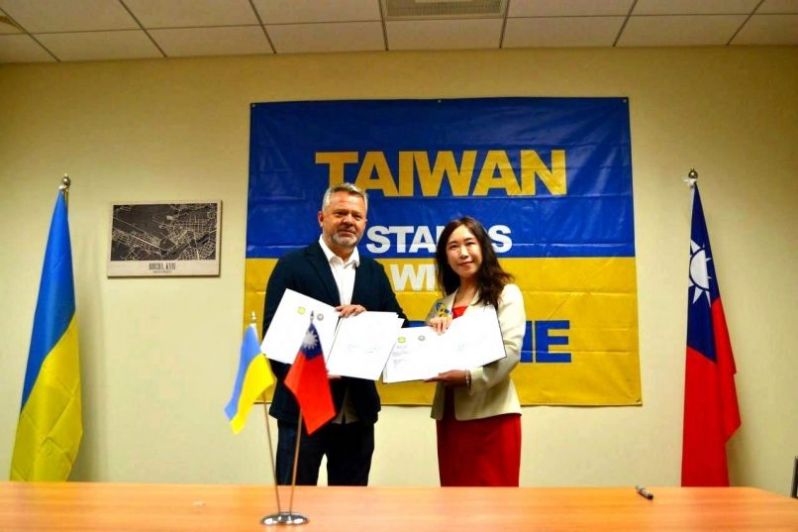 Taiwán y la República Checa firmaron un memorando de entendimiento (MOU) para apoyar a Ucrania en la construcción de infraestructura, especialmente ante las constantes amenazas de Rusia de atacar instalaciones de energía y agua durante el invierno.
El representante en la República Checa, Ke Liang-ruey (柯良叡), y el representante de la Oficina Económica y Cultural Checa en Taipéi, David Steinke, formalizaron el acuerdo por teleconferencia, según informó el Ministerio de Asuntos Exteriores (MOFA).
La iniciativa bilateral forma parte de un esfuerzo continuo que comenzó en 2023 para garantizar el acceso al agua y la energía a la población civil en Ucrania, añadió.
Fuente: https://www.taipeitimes.com/News/taiwan/archives/2025/06/29/2003839434
TAIWAN, CZECHIA INK UKRAINE DEAL
Taiwan and the Czech Republic signed a memorandum of understanding (MOU) to support Ukraine in building infrastructure, particularly in light of Russia’s ongoing threats to target energy and water facilities during winter.
Representative to the Czech Republic Ke Liang-ruey (柯良叡) and Czech Economic and Cultural Office in Taipei Representative David Steinke formalized the agreement via teleconference, the Ministry of Foreign Affairs (MOFA) said.
The bilateral initiative is part of an ongoing effort that began in 2023 to ensure access to water and energy for civilians in Ukraine, it said.
As part of this collaboration, Taiwan and the Czech Republic have deployed mobile water filtration systems benefiting 380,000 residents in Dnipropetrovsk Oblast, Deputy Minister of Foreign Affairs Francois Wu (吳志中) said.
In addition, the two nations are operating combined heat-and-power generators in Kharkiv Oblast to strengthen Ukraine’s energy grid resilience and ensure that 60,000 residents in the region would have electricity during the winter, he said.
Both regions are under threat of Russian incursions.
Taiwan continues to work closely with the Czech Republic and other like-minded allies to support Ukraine, he added.
Czech Governmental Envoy for the Reconstruction of Ukraine Tomas Kopency said the project is a unique trilateral model of cooperation that has provided water to civilians in the hardest-hit areas of Eastern Ukraine.
The project, which has been continually improved over the past two years, is a model of efficient multilateral cooperation and a milestone in the friendship between Taiwan and the Czech Republic, Kopency said.
Taiwan has joined forces with multiple European governments to assist with Ukraine’s post-war reconstruction, the ministry said.
The government has plans to expand its cooperation with Kyiv in more fields, including other forms of humanitarian aid, collaboration in education and projects to bolster the latter’s resilience, it said.
Taiwan’s participation in these efforts shows its deep commitment to international cooperation, and the universal values of freedom, peace and human rights, it added.
Indo-Pacific Monitor ®
Bilingual digital outlet on geopolitical issues around the Indo-Pacific area
Editor: LW, senior fellow of REDCAEM and CESCOS
Contact: ilwb@email.cz