En una despejada mañana del 17 de mayo, un cohete propulsado por metano despegó con estruendo de su plataforma de lanzamiento en el desierto de Gobi, surcando el cielo del noroeste de China con seis satélites en órbita.
Esto marcó el quinto vuelo exitoso de LandSpace, una de las empresas aeroespaciales comerciales más emergentes de China, y subrayó la ambición de Pekín de catapultar su sector espacial comercial al escenario mundial.
Dos días después, Galactic Energy, otra empresa espacial china de rápido crecimiento, lanzó un cohete desde un barco en el mar frente a la provincia oriental de Shandong, desplegando cuatro satélites en órbita.
Se espera que el número de lanzamientos de cohetes en China, tanto por parte de empresas estatales como privadas, alcance un récord en 2025, según informes de la industria china, en medio de los planes para aumentar la inversión en el sector.
READY FOR BLAST-OFF: CAN CHINA’S COMMERCIAL SPACE FIRMS REPLICATE SPACEX MAGIC? SPACE TOURISM LOOKS SET TO BE LAUNCHED IN CHINA SOON
On a clear morning on May 17, a methane-fuelled rocket thundered off its launchpad in the Gobi Desert, piercing the sky over north-western China carrying six satellites into orbit.
This marked the fifth successful flight for LandSpace, one of China’s rising commercial aerospace companies, and underlined Beijing’s ambition to catapult its commercial space sector onto the global stage.
Two days later, Galactic Energy, another fast-growing Chinese space player, launched a rocket from a ship at sea off eastern Shandong province, deploying four satellites into orbit.
The number of rocket launches in China by both state-owned and private firms is expected to hit a record high in 2025, according to Chinese industry reports, amid plans to ramp up investment in the sector.
So far, China has carried out more than 30 orbital launches, including at least six in June, with more on the horizon. In 2024, the country recorded 68 orbital launches and in 2023, 67 launches.
China’s space sector used to be tightly controlled by the state, until it was opened up to private companies in 2015.
Today, there are more than 500 commercial space companies in China.
China’s commercial space market is projected to balloon from around 2.8 trillion yuan (S$498 billion) in 2025 to over 6.6 trillion yuan by 2029, according to various research estimates.
In 2024, the Chinese government listed the commercial space sector as a “new engine of economic growth” in its government work report for the first time, prompting cities such as Beijing and Shanghai to roll out plans to accelerate investment in the sector.
Private firms offer services such as space tourism, satellite internet, Earth imaging for farming or city planning purposes as well as private rocket launches for putting small satellites into orbit.
In Beijing’s southern Daxing district, more than 160 aerospace-related enterprises have formed a cluster nicknamed “Rocket Street”. The city is building an exhibition hall where visitors, from the second half of 2025, can watch real-time launches of commercial rockets across China.
Catching up with the US
China’s space start-ups are chasing what analysts call the “SpaceX moment” or a breakthrough that sees a private Chinese space firm rival Mr Elon Musk’s rocket giant on the global stage.
SpaceX is the undisputed industry leader, accounting for more than half of the world’s 259 orbital launches in 2024. It is largely thanks to its reusable Falcon 9 workhorse, which has reduced costs for its customers.
At least six Chinese commercial space companies have so far successfully launched rockets into orbit. But none has yet to launch and recover a reusable rocket in the way SpaceX has done since 2017.
China’s progress is evident, but it still lags far behind the US, said Mr Clayton Swope, deputy director of the Aerospace Security Project at the Centre for Strategic and International Studies (CSIS).
“China has not been able to replicate the SpaceX magic, but arguably no other company anywhere has been able to do space at scale like SpaceX,” he said.
Investors in China hoping to emulate SpaceX’s success have poured money into Chinese private space companies with launch capabilities. But these Chinese firms operate on “a very small scale”, especially compared with SpaceX or Rocket Lab, which is founded in New Zealand but headquartered in the US.
Rocket reusability lies at the crux of China’s commercial space ambitions, as it is a key factor in cutting launch costs and attracting clients outside of China.
Dr Svetla Ben-Itzhak, assistant professor of space and international relations at Johns Hopkins University’s School of Advanced International Studies, said that while China’s private firms are about five to seven years behind SpaceX in reusable launch technology, the gap could close more rapidly given advances in propulsion and accelerated development cycles.
Chinese aerospace firms are optimistic about their prospects, with at least two founders of these companies saying that they could match SpaceX’s capabilities by 2030.
LandSpace founder Zhang Changwu, for instance, said in a June interview that the next three to five years will be a “decisive period” for China’s commercial space industry. His company is aiming for China’s first orbital reusable flight by the end of 2025.
Space tourism looks set to be launched in China soon.
Deep Blue Aerospace, a Chinese firm developing reusable rockets, plans to conduct a 12-minute suborbital flight – meaning the rocket will reach outer space but not enter orbit – for space tourists in 2027.
Its first two tickets, priced at 1.5 million yuan, were snapped up the moment they went on sale in October 2024. Meanwhile, state-backed CAS Space has pledged to begin space tourism flights by 2028.
However, barriers remain for Chinese firms eyeing global markets.
“International customers want high reliability rates, and China’s commercial launchers generally just don’t have that yet,” said CSIS’ Mr Swope.
Lingering trust issues with China may also hold back international interest in using China’s space services for launch, remote sensing or broadband, he said.
“Due to geopolitical developments, would a Chinese company shut off service to international customers? Are there security concerns arising from the use of a Chinese company?” said Mr Swope.
Dr Ben-Itzhak echoed these sentiments, noting that the distrust of Chinese tech is the main hindrance, largely due to perceived and often explicit links to the Chinese government and military, and concerns over transparency.
There have also been setbacks in China’s commercial space push.
In June 2024, a test rocket by Chinese firm Space Pioneer malfunctioned and crashed in central Henan province. No one was hurt, but the company compensated locals for damaged buildings.
Months later, in December, the initial public offering (IPO) of Jilin-based satellite firm Chang Guang Satellite Technology was abruptly halted, raising fresh doubts about the sector’s profitability and long-term prospects.
Even so, Chinese companies, particularly state-owned ones, are making inroads in markets that are friendlier to China.
In November 2024, CAS Space’s commercial rocket delivered a remote-sensing satellite for Oman, marking a key step into the international market.
Analysts said a breakout moment for China’s space start-ups may not just come from reusable rockets but could also come in the form of a high-profile IPO, securing more foreign clients or completing a broadband satellite mega-constellation akin to Starlink.
SpaceX now has more than 7,800 Starlink satellites in operation. In comparison, China’s two main competitors, Guowang and Qianfan, have deployed about 50 and just under 100 satellites, respectively.
Still, Qianfan has inked partnerships to offer satellite communications in Brazil, Malaysia and Thailand, and is eyeing dozens of other markets in Asia, Africa and Latin America.
Dr. Ben-Itzhak said if a private Chinese company breaks through globally, it would not only challenge US commercial dominance but could also change perceptions of China from being a state space power to an innovation leader in space tech.
“This would be comparable to Huawei’s rise in telecom,” she said. “But this time, with rockets and satellites.”
EN LA GUERRA FRÍA, CHINA TEMÍA UN ATAQUE NUCLEAR SOVIÉTICO: SU RESPUESTA FUE LA MAYOR BASE NUCLEAR SUBTERRÁNEA DEL PLANETA
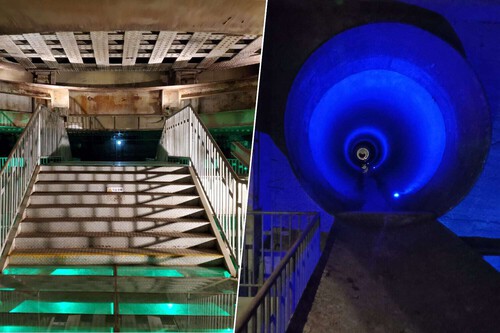 La ruptura sino-soviética derivó en una grave crisis entre China y la URSS que llevó a temores de un bombardeo nuclear sobre Beijing.
China se movió construyendo bases nucleares, siendo la planta 816 el mayor exponente de la «nueva» fiebre nuclear.
Hablar de la Guerra Fría es hablar de espionaje, bases secretas, armas avanzadas para ganar al rival en un potencial conflicto armado y, sobre todo, la explosión del arsenal atómico y el miedo constante al apocalipsis nuclear. Y ello implica hablar de Rusia y EEUU como protagonistas, dejándonos en el tintero a otros actores del conflicto. China fue otro nombre propio durante la Guerra Fría, metiéndose de lleno en la carrera nuclear. Y lo hicieron a lo grande. Con la planta militar nuclear más grande del mundo, la misteriosa Planta Militar Nuclear 816.
Malas migas con la URSS.
La Guerra Fría fue un conflicto tremendamente complicado que se jugó a tres bandas parte del tiempo. EEUU y la URSS fueron dos de las patas, pero China entró en liza cuando estalló el conflicto sino-soviético. Simplificando mucho la historia, la Unión Soviética y China compitieron por ser los adalides del comunismo y, en un momento de 1969, la Unión Soviética incluso se planteó bombardear China con bombas nucleares, incluido Beijing.
Sin embargo, Estados Unidos «intervino«, dando un giro al conflicto y a las relaciones con China. La postura de ambos se acercó los años posteriores, pero antes de eso, y con una China oliéndose que la URSS podría amenazar con su arsenal nuclear, comenzó a construir la Planta Militar Nuclear 816.
Gran Muralla Nuclear
Zhou Enlai, primer ministro chino en aquel momento, respondió a la ruptura sino-soviética dando el pistoletazo de salida a una base militar en la región de Chongqing que sería mucho más que un búnker: se convertiría en la instalación subterránea nuclear más importante del país. ¿El objetivo? Producir plutonio que se pudiera instalar en armas, creando misiles nucleares sin ayuda soviética.
Las obras iniciaron en 1966 y en proceso participaron más de 60.000 soldados del Ejército Popular de Liberación. El objetivo de la instalación era que estuviera blindada ante ataques con misiles, pero también contra terremotos de magnitud 8. Además, tenía una gran muralla natural a su alrededor: la montaña Jinzi y su granito.
Colosal. El secretismo fue una constante a la hora de construir el complejo. Esto es algo habitual y lógico en este tipo de instalaciones, llegando al extremo de que las familias de los trabajadores no sabían ni en qué estaban trabajando sus allegados ni dónde. En los registros oficiales se indica que fallecieron 76 personas durante unas obras que se extendieron a lo largo de 17 años, pero hay fuentes que apuntan que la cifra sería mucho mayor.
Al margen, la Planta Militar Nuclear 816 cuenta con una superficie de más de 104.000 m² y es el mayor sistema de túneles excavado por el ser humano. Sus 130 galerías suman más de 20 kilómetros de longitud a lo largo de 18 cuevas artificiales unidas, tiene más de 13 niveles y la altura hasta el punto más profundo es de casi 80 metros, similar a un edificio de 25 pisos. Además, para ir de unos sitios a otros dentro de la planta, se podía usar coches que circulaban por carreteras subterráneas.
Marcha atrás.
Durante los años de la construcción, China realizó avances en su programa nuclear. Aunque ha sido más reciente cuando alcanzaron oficialmente las 500 cabezas, la primera prueba nuclear pública del país fue en 1964, pero el complejo de la Planta 816 sirvió de poco. ¿El motivo? Tras 17 años construyendo ese colosal sistema cavernario y con los avances al 85%, decidieron cancelarlo.
Los cambios en las relaciones internacionales y la tensión menguante de la Guerra Fría propiciaron que se diera un frenazo en el proyecto. El reactor no llegó nunca a estar operativo y el programa se clasificó en 1984. En 2002, sin embargo, salió a la luz y pudimos conocer todos estos detalles, incluso saber que parte de la planta se recicló para convertirse en una fábrica de fertilizantes.
Turistas, bienvenidos.
Pero con todo eso excavado, sería una tontería tenerlo cerrado a cal y canto. Algo así debieron pensar las autoridades, ya que, en 2010, decidieron abrir parte de la base al público. Gracias a ello podemos ver fotografías como las que acompañan estas líneas y conocer cómo serían las condiciones de una base destinada a fabricar misiles nucleares en la China de hace 60 años.
Y, además de servir como museo, es un memorial para los sacrificios humanos de quienes participaron en el proyecto, fueran bajas oficiales… o de las que no constan en los registros.
DURING THE COLD WAR, CHINA FEARED A SOVIET NUCLEAR ATTACK: ITS RESPONSE WAS THE LARGEST UNDERGROUND NUCLEAR BASE ON THE PLANET
The Sino-Soviet split led to a serious crisis between China and the USSR, leading to fears of a nuclear bombing of Beijing.
China moved forward by building nuclear bases, with Plant 816 being the greatest example of the «new» nuclear fever.
Talking about the Cold War means talking about espionage, secret bases, advanced weapons to defeat the rival in a potential armed conflict, and, above all, the explosion of the atomic arsenal and the constant fear of nuclear apocalypse. And this implies talking about Russia and the US as protagonists, leaving out other actors in the conflict. China was another household name during the Cold War, fully immersing itself in the nuclear race. And they did so in a big way. With the world’s largest nuclear military plant, the mysterious Nuclear Military Plant 816.
PERÚ-VIETNAM: EL PRIMER MINISTRO VIETNAMITA SE REUNIO CON LA PRESIDENTA PERUANA EN NIZA
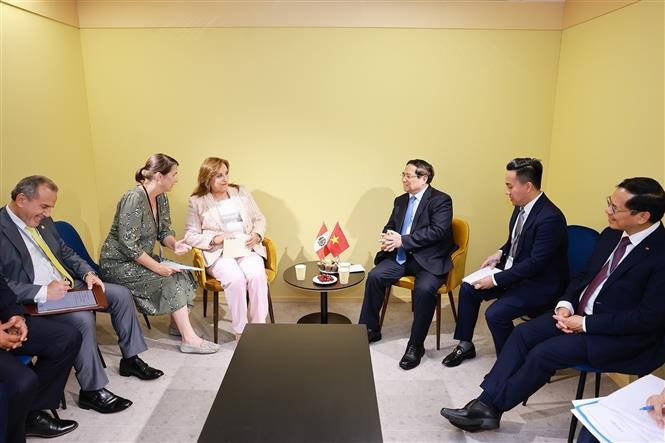 El Primer Ministro vietnamita, Phạm Minh Chính, se reunió con la Presidenta peruana, Dina Boluarte, en el marco de la Tercera Conferencia de las Naciones Unidas sobre los Océanos (UNOC 3) en Niza.
El Primer Ministro Chính afirmó que Vietnam concede importancia y desea promover la cooperación multifacética con Perú. Transmitió respetuosamente los saludos e invitaciones para visitar Vietnam del Secretario General del Partido, Tô Lâm, el Presidente del Estado, Lương Cường, y el Presidente de la Asamblea Nacional, Trần Thanh Mẫn, a la Presidenta Boluarte y a los altos líderes del Perú. Ambos líderes expresaron su satisfacción al observar la creciente confianza política y los intercambios de delegaciones de alto nivel entre ambos países, especialmente tras la visita de Estado a Perú del presidente Cường en noviembre de 2024.
Expresó su deseo de visitar Vietnam pronto y acordó instruir a los ministerios y dependencias peruanas para que se coordinen con los socios vietnamitas para concretar los resultados de la visita del presidente Cường, centrándose en promover la cooperación comercial y de inversión.
El primer ministro Chính solicitó al gobierno peruano que continúe creando condiciones favorables para que las empresas vietnamitas amplíen la cooperación y la inversión en Perú, contribuyendo al desarrollo y sirviendo a los intereses del pueblo peruano. Coincidió en que ambas partes deberían considerar ampliar la cooperación a áreas con potencial, como la cooperación agrícola, el petróleo y el gas, y la minería.
PERÚ-VIETNAM: VIETNAMESE PRIME MINISTER MEETS WITH PERUVIAN PRESIDENT IN NICE
Vietnamese Prime Minister Phạm Minh Chính met with Peruvian President Dina Boluarte on the sidelines of the 3rd United Nations Ocean Conference (UNOC 3) in Nice.
PM Chính affirmed that Việt Nam attaches importance to and wants to promote multifaceted cooperation with Peru. He respectfully conveyed the greetings and invitations to visit Việt Nam from Party General Secretary Tô Lâm, State President Lương Cường, and National Assembly Chairman Trần Thanh Mẫn to President Boluarte and senior leaders of Peru.
The two leaders expressed their delight at witnessing the increasing political trust and high-level delegation exchanges between the two countries, especially through the state visit to Peru by President Cường in November 2024.
President Boluarte affirmed that Peru was honoured to welcome President Cường and a high-ranking Vietnamese delegation to visit Peru and attend the APEC Economic Leaders’ Week 2024. She expressed her wish to visit Việt Nam soon, and agreed to direct Peruvian ministries and branches to coordinate with Vietnamese partners to concretise the results of President Cường’s visit, focusing on promoting trade and investment cooperation.
PM Chính asked the Peruvian Government to continue creating favourable conditions for Vietnamese enterprises to expand cooperation and investment in Peru, contributing to the development and serving the interests of the Peruvian people. He agreed that the two sides should consider expanding cooperation to potential areas, including agricultural cooperation, oil and gas, and mining.
President Boluarte affirmed that Việt Nam has always been Peru’s leading important partner in Southeast Asia. She highly appreciated the important contributions of the Viettel Military Industry and Telecom Group through the Bitel project and hoped that Bitel would continue to expand its investment in Peru. The President suggested the two countries coordinate to effectively utilise the Comprehensive and Progressive Agreement for Trans-Pacific Partnership (CPTPP).
On this occasion, the two leaders discussed ways to enhance coordination at multilateral forums and on regional and international issues of mutual concern. They also agreed to coordinate to uphold and respect international law and the United Nations Charter, promote trade liberalisation, South-South cooperation, and support each other’s candidacy for positions in important UN agencies and other international organisations.
Indo-Pacific Monitor ®
Bilingual digital outlet on geopolitical issues around the Indo-Pacific area
Editor: LW, senior fellow of REDCAEM and CESCOS
Contact: ilwb@email.cz