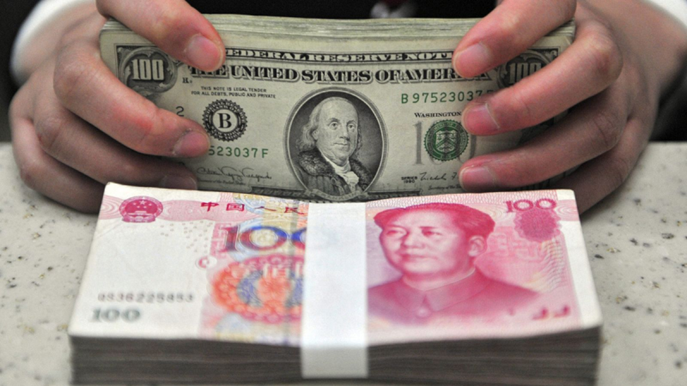
Dos décadas después de que China comenzara a permitir la fluctuación de su moneda, las autoridades vuelven a obstaculizar su apreciación. Esto nos recuerda que la decisión de 2005 de romper la vinculación estricta del yuan con el dólar, por importante que fuera, tenía sus condiciones.
Si bien Pekín nunca abandonó el mercado cambiario, las intervenciones recientes son notables. Sugieren un deseo de preservar las exportaciones, que se volvieron más competitivas gracias a una moneda débil, y la preocupación de que la economía nacional esté más débil de lo que sugieren las cifras oficiales de crecimiento. El problema es que es poco probable que esta situación se solucione por sí sola. Las exportaciones aumentaron más de lo previsto en noviembre, según cifras publicadas recientemente, y el superávit comercial superó el billón de dólares por primera vez. En cambio, se proyectaba que una serie de datos apuntarían a un panorama interno deslucido.
No es que el yuan haya sufrido en 2025. Recientemente, subió casi un 4 % frente al dólar y se encamina a su mejor rendimiento anual en cinco años. Pero estas ganancias son moderadas, considerando que el dólar estadounidense no está pasando por un buen momento. El ringgit malayo, el baht tailandés y los dólares de Singapur y Taiwán han tenido un rendimiento mucho mejor. Los inversores quieren impulsar el yuan al alza, pero siguen encontrando resistencia por parte del Banco Popular de China.
Fuente: https://www.japantimes.co.jp/commentary/2025/12/18/world/push-for-stronger-yuan-continues/
WHAY THE PUSH FOR A STRONGER YUAN WON’T GO AWAY
Two decades after China began allowing its currency to fluctuate, authorities are again standing in the way of an appreciation. It’s a reminder that the decision in 2005 to sever the yuan’s hard peg to the dollar, important as it was, came with strings attached.
While Beijing never walked away from the foreign-exchange market, recent interventions are noteworthy. They suggest a desire to preserve exports made more competitive by a weak currency and a worry that the domestic economy is softer than official growth numbers suggest. The problem is that this situation is unlikely to cure itself. Exports rose more than forecast in November, according to recently released figures and the trade surplus exceeded $1 trillion for the first time. A raft of data, by contrast, was projected to point to a lackluster domestic picture.
Not that the yuan has suffered in 2025. Just recently, it was up almost 4% against the dollar and on course for the best annual performance in five years. But these gains are middling, considering the greenback is having a less-than-stellar time. The Malaysian ringgit, Thai baht and Singapore and Taiwan dollars have done much better. Investors want to take the yuan higher, but keep encountering resistance from the People’s Bank of China.
One of the main ways for the central bank to signal intentions is through the setting of a reference rate for the currency; dealers try to predict the starting point for the day’s trade. Earlier this month, the fixing was significantly weaker than forecast. State banks reinforced the go-slow message, buying dollars to keep a lid on the yuan. Beijing recognizes the power of markets. FX trading has ballooned to $9.6 trillion a day, compared with just $1.9 trillion when the long practice of maintaining a value for the yuan of 8.3 per dollar ceased in 2005. It had been trading at around 7 in recent days.
It’s not a stronger rate per se that repels the government. Rapid moves are anathema and decisions about the pace and degree of change must always reflect what top officials believe is the overall national interest. The challenge is how to preserve the export machine, while acknowledging the reasons behind the pressure for appreciation: A rally in local stocks, which draws money into the country, and an easing of trade tensions with the U.S., which tends to lift emerging markets, generally.
U.S. President Donald Trump has historically moaned that a range of nations, China included, conspire to keep their currencies artificially weak to «rip off” the U.S. But in the most recent round of talks between the two countries, the yuan hasn’t been a sticking point and tariffs have come down from levels that would have crippled the economy. Washington and Beijing appear content to come to minideals every few months to stop the relationship nosediving. Not allowing any yuan gains might jeopardize this relative detente.
Chinese leader Xi Jinping should go further and let it advance some more. According to two former American officials, the yuan could be undervalued to the tune of as much as 18%, based on International Monetary Fund estimates. A number of large banks, including Goldman Sachs, tip advances next year. Prominent Chinese economists, while careful to not be sharply critical in their commentary, see plenty of scope for upward movement. It may even help the economy — over time — by stimulating local demand. The question will be whether the short-term disruption and difficulties will persuade top policymakers that it’s a worthwhile step.
The time has come to let the yuan run a bit, says Miao Yanliang, chief strategist at China International Capital, and a former top economist at the foreign-exchange regulator. The dollar is likely to be soft for a few years. It’s natural for other currencies to rise in that environment; to hold the yuan back would be to allow it to depreciate against other trading partners.
It’s not without risks. China has been skirting deflation and a strong currency could exacerbate the difficulties. Activity could use a boost in other areas: Retail sales have been disappointing, along with industrial production and employment, while investment is languishing. By lowering the cost of imports, they could become more attractive to consumers.
The case for rebalancing China’s economy away from exports is a familiar one. It lurks behind many of the calls for appreciation in the 20 years since the hard link was broken. And it was one of the arguments in favor of reforming the trading rules in 2005 — along with heading off protectionist bills in the U.S. Congress. Now, there is a trade-barrier fan in the White House. Extracting concessions from China these days is all about getting it to buy more soybeans and allow the West to purchase the rare minerals so critical to modern manufacturing.
Encouraging further yuan strength — or not standing so vigorously in its path — makes sense. The alternative is a sudden move, with disruption that entails. In
 IMAGENES SATELITALES SUGIEREN QUE ARMADA DE CHINA ESTÁ PREPARANDO UN EJERCICIO NAVAL CON LOS PORTAVIONES FUJIAN Y LIAONING
Imágenes satelitales que circularon en redes sociales chinas en los últimos días ubicaron a dos de los portaaviones de la Armada del EPL en el mismo punto logístico: el Fujian —el más nuevo y avanzado— y el Liaoning, el primero en operar como plataforma aeronaval para Pekín. La coincidencia habría ocurrido en la base naval de Qingdao, sobre el mar Amarillo, y reactivó la lectura de que China podría estar preparando un ejercicio con doble portaaviones en el corto plazo.
En paralelo a esas imágenes, se difundió una notificación de autoridades de seguridad marítima en Dalian que anunció una actividad militar en el estrecho de Bohai y el norte del mar Amarillo, con prohibición de ingreso para buques civiles durante una semana desde la tarde del domingo. La zona es sensible por ubicación y función: Dalian custodia el acceso al Bohai y se asocia a un nodo naval e industrial clave para la planificación y el sostenimiento de operaciones.
El portaaviones Fujian y su tránsito por el estrecho de Taiwán
El movimiento del Fujian venía siendo seguido con atención desde su tránsito reciente por el Estrecho de Taiwán, reportado por el Ministerio de Defensa taiwanés. De acuerdo con esa versión, el buque cruzó la vía marítima sin señales de una operación aeronaval visible, y las imágenes divulgadas por Taipéi mostraron la cubierta sin aeronaves embarcadas, un detalle que suele interpretarse como tránsito o reposicionamiento más que como despliegue completo.
En términos de capacidades, el Fujian representa el salto cualitativo que China venía buscando: incorpora catapultas electromagnéticas, una tecnología que permite lanzar aeronaves con mayor carga útil y ritmo de salidas, acercando su perfil al estándar de portaaviones de nueva generación. Su incorporación es especialmente relevante porque complementa a plataformas previas con distinta “escuela” operativa, como el Liaoning, cuyo valor reside en su experiencia acumulada y en la madurez de procedimientos de cubierta, logística y coordinación de ala aérea.
En lecturas difundidas por la prensa asiática, amarrar ambos portaaviones en el mismo punto podría responder a necesidades de intercambio técnico y estandarización de rutinas entre dotaciones, un paso previo lógico antes de operar en conjunto en un área de exclusión temporal para la navegación civil.
La actividad de portaaviones chinos viene siendo monitoreada de cerca por vecinos como Japón y Taiwán, sobre todo cuando los despliegues se aproximan a corredores estratégicos y archipiélagos clave del Indo-Pacífico. En ese marco, cada aviso de ejercicios o zonas restringidas tiende a leerse como parte de una secuencia mayor de entrenamiento de “mar lejano” y proyección naval sostenida, más allá del evento puntual.
SATELLITE IMAGES SUGGEST CHINA’S NAVY IS PREPARING FOR NAVAL EXCERCISE WITH THE AIRCRAFT CARRIER FUJIAN AND LIAONING
Satellite images circulating on Chinese social media in recent days have placed two of the PLA Navy’s aircraft carriers at the same logistical point: the Fujian—the newest and most advanced—and the Liaoning, the first to operate as a naval air platform for Beijing. The sighting reportedly occurred at the Qingdao naval base on the Yellow Sea, reviving speculation that China may be preparing a double-carrier exercise in the near future.
Concurrent with these images, a notification from maritime security authorities in Dalian was released announcing military activity in the Bohai Strait and the northern Yellow Sea, with a one-week ban on entry for civilian vessels starting Sunday afternoon. The area is sensitive due to its location and function: Dalian guards access to the Bohai Sea and is associated with a key naval and industrial hub for planning and sustaining operations.
 LOS CAZAS FURTIVOS F-35A DE LA FUERZA AÉREA DE EE.UU. DESPLEGADOS EN JAPÓN CONFORMAN LA PRIMERA LÍNEA DE DISUASIÓN
La Fuerza Aérea de los EE.UU. (USAF) mantiene desplegados en Japón a cazas furtivos F-35A Lightning II como parte de su esquema de presencia rotativa en el Indo-Pacífico, consolidando una capacidad aérea avanzada orientada a la disuasión y a la defensa de los intereses aliados en la región.
El despliegue está encabezado por el 356to Escuadrón Expedicionario de Cazas (EFS), unidad proveniente de la Base de la Fuerza Aérea de Eielson, en Alaska, que opera desde la Base Aérea Kadena bajo el programa de rotación de cazas de la USAF. La misión principal del escuadrón es garantizar la superioridad aérea y mantener un alto nivel de preparación operativa ante eventuales contingencias.
Integración operativa y ejercicios conjuntos
El 356to EFS desarrolla entrenamientos regulares junto a aeronaves F-35B Lightning II del Cuerpo de Marines de los EE.UU., con base en Marine Corps Air Station Iwakuni, con el objetivo de perfeccionar la generación de poder aéreo desde ubicaciones alternativas. Asimismo, la unidad participa en ejercicios de gran escala como Keen Sword, orientados a reforzar la interoperabilidad y la coordinación entre EE.UU. y Japón.
A estas actividades se suma la integración con aeronaves E-3 Sentry del 961.º Escuadrón de Control Aéreo Aerotransportado, que aportan capacidades de comando y control aéreo, permitiendo la sincronización de operaciones conjuntas en los dominios aéreo, marítimo y terrestre. En este marco, también participan medios de la Japan Air Self-Defense Force, fortaleciendo la coordinación bilateral.
El F-35A es un caza de quinta generación diseñado para operar en entornos altamente disputados. Sus características incluyen un perfil furtivo, fusión avanzada de sensores y sistemas de guerra electrónica, que permiten una mayor conciencia situacional y una integración eficaz con otras plataformas.
“El F-35 nos da una ventaja que se extiende más allá del avión en sí”, explicó Toner. “Es un multiplicador de fuerza que vincula nuestras fuerzas, amplificando la disuasión en todo el teatro de operaciones”. El despliegue del 356to EFS es sostenido por el personal de la 18va Ala en Kadena, responsable de garantizar la infraestructura y el soporte necesarios para que las unidades rotativas puedan operar con rapidez y continuidad en la región.
Contexto regional y aumento de la actividad militar
El despliegue de los F-35A en Japón se produce en un contexto de creciente actividad militar en el Indo-Pacífico. El 30 de diciembre, China intensificó el ejercicio Justice Mission 2025, desplegando fuerzas del Ejército Popular de Liberación (EPL) alrededor de la isla de Taiwán. Las maniobras incluyeron la participación coordinada del Ejército, la Armada, la Fuerza Aérea y la Fuerza de Cohetes, con operaciones aéreas y navales en múltiples ejes..
Durante estas actividades, el EPL confirmó ejercicios de tiro con munición real, operaciones de defensa antiaérea y antimisil, ataques antibuque y simulaciones de bloqueo marítimo. En paralelo, medios oficiales informaron prácticas anfibias encabezadas por el buque de asalto Tipo 075 Hainan, así como el lanzamiento de misiles en zonas marítimas designadas.
A ello se suma la reciente prueba de un misil antibuque hipersónico YJ-20, lanzado desde un destructor Tipo 055 de la Armada china. El disparo fue difundido por China Military Bugle, cuenta oficial del Centro de Medios del PLA, y representa la primera confirmación pública de un lanzamiento real de este sistema desde un buque de guerra.
Ajustes estratégicos de EE.UU. en el Indo-Pacífico
En paralelo al refuerzo de capacidades aéreas, EE.UU. avanza en iniciativas logísticas orientadas al Indo-Pacífico. La reciente promulgación de la Ley de Autorización de Defensa Nacional habilita un programa piloto para el alquiler de aeronaves anfibias operadas por contratistas, destinadas a apoyar al U.S. Indo-Pacific Command (INDOPACOM). El programa, con una duración prevista de tres años, busca ampliar las capacidades de despliegue y apoyo logístico, aunque aún no se han detallado las plataformas ni la cantidad de aeronaves involucradas.
Presencia sostenida y disuasión regional
Desde su base permanente en Alaska hasta su despliegue en Okinawa, el 356to EFS mantiene un nivel de entrenamiento continuo en condiciones exigentes, lo que facilita su rápida proyección en el teatro del Pacífico. La presencia de los F-35A en Japón se integra así a una estrategia más amplia de EE.UU. orientada a sostener la disuasión, la interoperabilidad con aliados y la capacidad de respuesta ante escenarios de alta complejidad en el Indo-Pacífico.
INDO-PACIFIC: U.S. AIR FORCE F-35A STEALTH FIGHTERS DEPLOYED IN JAPAN FORM THE FIRST LINE OF DETERRENCE
The U.S. Air Force (USAF) maintains F-35A Lightning II stealth fighters deployed in Japan as part of its rotational presence scheme in the Indo-Pacific, consolidating an advanced air capability focused on deterrence and the defense of allied interests in the region.
The deployment is led by the 356th Fighter Expeditionary Squadron (EFS), a unit from Eielson Air Force Base, Alaska, operating from Kadena Air Force Base under the USAF fighter rotation program. The squadron’s primary mission is to ensure air superiority and maintain a high level of operational readiness in the face of potential contingencies.
Operational Integration and Joint Exercises
The 356th EFS conducts regular training exercises with F-35B Lightning II aircraft from the U.S. Marine Corps, based at Marine Corps Air Station Iwakuni, with the goal of perfecting the generation of air power from alternative locations.
Published twice per week by Nuevo Poder. Articles and op-eds focusing on geopolitical issues around Indo-Pacific area
Editor: LW, senior fellow of REDCAEM and CESCOS
Submit contributions (that can be read with ease and pleasure), to ilwb@email.cz