Informes recientes emitidos por las agencias de inteligencia chinas indicaron una creciente cooperación en defensa entre Taiwán e Israel para desarrollar el sistema de defensa taiwanés «T-DOM».
Informes recientes emitidos por las agencias de seguridad, militares e inteligencia chinas durante noviembre y diciembre de 2025 indicaron una creciente cooperación en defensa entre Taiwán e Israel para convertir el sistema de defensa taiwanés «Taiwán o T-DOME» en uno similar al sistema israelí Cúpula de Hierro, con una flagrante asistencia militar israelí a Taiwán frente a China. Por esta razón, círculos relevantes en Pekín monitorearon la visita secreta del viceministro de Defensa taiwanés, François Wu, a Israel entre septiembre y noviembre de 2025. Informes de inteligencia y militares chinos especularon que Taiwán podría adquirir tecnologías avanzadas de radar y misiles israelíes, como el sistema israelí Arrow-2, u otras tecnologías militares inspiradas en sistemas israelíes para su uso en el sistema de defensa aérea T-DOME de Taiwán, similar al sistema Cúpula de Hierro israelí.
CHINESE INTELLIGENCE: ISRAELI AID TO TAIWAN´S T-DOME MISSILE SHIELD SPARK SHARP REBUKE
Recent reports issued by Chinese intelligence agencies indicated increasing defense cooperation between Taiwan and Israel to develop the Taiwanese defense system “T-DOM”.
Recent reports issued by Chinese security, military, and intelligence agencies during November and December 2025 indicated increasing defense cooperation between Taiwan and Israel to develop the Taiwanese defense system “Taiwan or T-DOME” into another similar to the Israeli Iron Dome system with blatant Israeli military assistance to Taiwan in the face of China. For this reason, relevant circles in Beijing monitored Taiwanese Deputy Defense Minister Francois Wu’s secret visit to Israel between September and November 2025. Chinese intelligence and military reports speculated that Taiwan might purchase advanced Israeli radar and missile technologies, such as the Israeli Arrow-2 system, or other military technologies inspired by Israeli systems for use in Taiwan’s T-DOME air defense system, similar to Israel’s Iron Dome system.
Official statements made publicly by Taiwanese Foreign Minister Lin Chia-long in November 2025, which were provocative to China, indicated that “there was technical learning and defense interaction between the Israeli and Taiwanese sides, given the similarity between the design of the Taiwanese T-DOM defense system and Israel’s Iron Dome system.” Official Chinese and military anger toward Israel reached its peak, especially after, in September 2025, the Taiwanese capital received several Israeli delegations, including six members of the Israeli Knesset. Furthermore, in October 2025, Taiwanese Deputy Foreign Minister “François Wu” met with the Director General of the Israeli Ministry of Welfare, “Yinon Aroni,” in Tel Aviv.
The relationship between Taiwan’s new air defense system, known militarily as T-DOM, and Israel’s Iron Dome system, and its connection to the Gaza War, along with Taiwan’s recognition of Israel and its attacks on Hamas and Iran after the Gaza War, as well as the Taiwanese government’s support for the principle of separation from China and its attacks on Hamas and its support for Israel’s decisions during the Gaza War, have all contributed to this situation. China is angered by a number of Taiwanese political and military statements regarding the Gaza War and Taiwan’s blatant support for Israel, considering Taiwan an integral part of mainland China and therefore not entitled to make any independent political or military statements, especially in the context of foreign policy. Taiwan’s supposed ties to and dependence on China are all complex and intertwined politically and militarily within the context of current global geopolitics and the rivalry between Washington and Beijing.
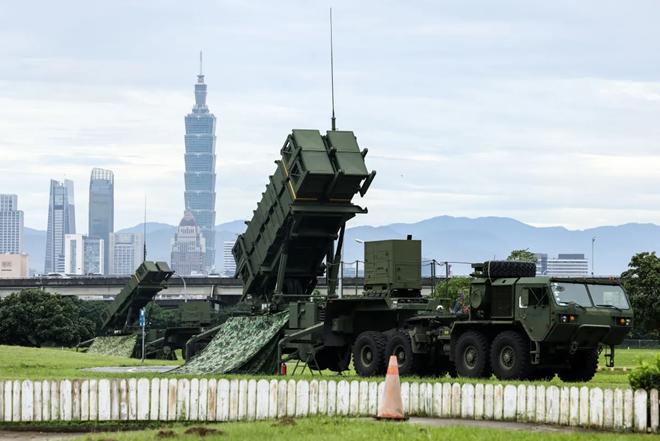
Here, China expressed its anger towards Israel after Taiwanese Deputy Foreign Minister “Francois Wu” made a secret visit to Israel in November 2025. This visit by the Taiwanese Foreign Minister to Tel Aviv came at a time when Taiwan was increasingly drawing parallels between the threats it faces from China and the threats Israel faces from Iran and its proxies in the region. This was highlighted in a report published by The Times of Israel, which stated publicly that “this shared experience between Taiwan and Israel in confronting larger adversaries has contributed to a greater rapprochement between the two sides in recent years.” Taiwanese Foreign Minister Lin Chia-long responded by emphasizing that “there is an exchange of expertise and interaction in the fields of technology and defense between Taiwan and Israel,” adding that “Israel has the Iron Dome system, while Taiwan has the T-DOM system.” The Israeli multi-layered defense system includes the Iron Dome, David’s Sling, Arrow missiles, and the American THAAD system. Taiwan’s T-DOM design integrates existing systems, such as the US Patriot missiles, Taiwan’s Sky Po missiles, and anti-aircraft guns.
Taiwan openly justifies its Israeli-style military system by stating that “there is a great deal of similarity between the military threat it faces from China and that faced by Israel, which has engaged in conflicts with neighboring countries, including Iran.” For this reason, Taiwan, whose government rejects China’s territorial claims, hosts Israeli officials and lawmakers. Taiwan’s diplomatic presence in the Middle East is limited, but both Taiwan and Israel have embassies in Tel Aviv and Taipei, respectively. Therefore, China objected to official Israeli military and political delegations visiting Taiwan, or vice versa. The Taiwanese Ministry of Foreign Affairs declined to comment on whether official military and political delegations had visited Israel. Taiwan’s response to the Chinese side was limited to an official Taiwanese statement indicating that “Taiwan and Israel share the values of freedom and democracy and will continue to work practically to promote cooperation and mutual benefit in areas such as trade, technology, and culture and welcome further forms of mutually beneficial cooperation.”
China’s firm military objection to the Israeli Ministry of Defense stemmed primarily from the similarity between Taiwan’s new multi-layered air defense system, known as T-DOM, and Israel’s Iron Dome system. The Chinese Ministry of Defense and the People’s Liberation Army discovered a complete resemblance between the plans for constructing the Israeli Iron Dome system and Taiwan’s plans for its multi-layered air defense system, militarily designated “T-DOM” or (Taiwan-DOM).
The Taiwanese government had previously requested the Israeli Ministry of Defense’s assistance in arming the system to counter China itself, aiming to provide Taiwan with an effective interception against Chinese air threats, according to Taiwanese claims directed at the US and the West, particularly those posed to Taiwan by China. Taiwan’s new T-DOM defense system resembles Israel’s Iron Dome, being a short-range air defense system designed to intercept missiles and threats near Taiwan, according to the Taiwanese government, which opposes China. Taiwan’s growing military relationship with Israel aims to integrate existing sensitive Israeli and American military and defense systems, such as the American Patriot missiles and the domestically produced Sky Bow missiles, with an advanced Taiwanese air defense network similar to Israel’s Iron Dome. This integration is intended to increase the accuracy of Taiwan’s interception of Chinese attack systems and enhance the effectiveness of Taiwanese defenses against China.
This indicates significant and ongoing covert military cooperation between Taiwan and Israel against China, despite the absence of formal diplomatic recognition between the two countries, a situation that China opposes.
From my research and analytical perspective on the Chinese side, Taiwan’s statement, directed against China itself, emphasizing the importance of learning from Israeli experience and lessons from the Gaza war to confront any aggression or threat, such as that posed by Hamas, is a provocation of China’s stance on the Gaza war itself. This is especially true given Taiwan’s official announcement that it is studying all war scenarios in Gaza and the effectiveness of Israel’s Iron Dome in intercepting missiles launched by Israel’s adversaries, such as Hamas, Iran, and Hezbollah, to develop its defenses against any potential Chinese attack. This confirms a clear link between the Gaza war and the Taiwanese-Israeli rapprochement, which Israel has exploited militarily, considering the deterioration of its relations with China and China’s stance, which Israel perceived as biased towards the Palestinians during the Gaza war, leading to strained Sino-Israeli relations. Consequently, Israel has exploited this tension between Taiwan and China to strengthen its ties with Taiwan. Taiwanese Foreign Minister Francois Wu stated explicitly that his country is working to deepen its relations with Israel and has received more support from it than from any other country in the Middle East.
Because of these developments, China officially announced its rejection of this overt military and defense relationship between Taiwan and Israel. This blatant Israeli circumvention of its relations with Taiwan in the face of Beijing’s actions is particularly troubling. Although Israel does not officially recognize Taiwan as an independent state and adheres only theoretically to the “One China policy,” like most countries in the world, to maintain its relations with Beijing, Taiwan’s recent stance in which the Taiwanese side officially declared its desire to strengthen relations with Tel Aviv after the Gaza war and described the Palestinian position as “very bad” has provoked the ire of China. China considers Taiwan an integral part of its territory and strongly opposes any official contact or military cooperation between Taiwan and any other country, especially Israel.
Accordingly, Chinese political, intelligence, and security circles view such military cooperation between Taiwan and Israel as a violation of its national sovereignty and interference in its internal affairs by the government of Israeli Prime Minister “Benjamin Netanyahu” and his Ministry of Defense, a matter rejected by the Beijing government.
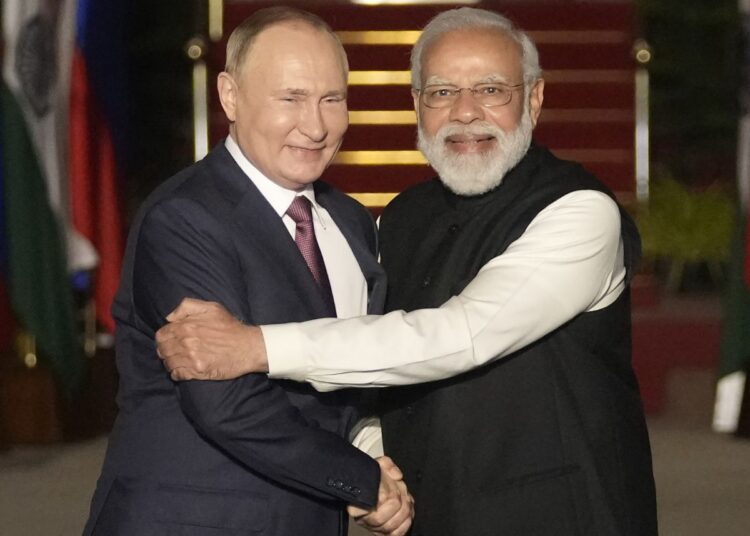 LOS DETALLES SOBRE RELOS, EL PACTO BILATERAL ENTRE RUSIA E INDIA CENTRADO EN DEFENSA
Vladimir Putin, presidente de Rusia, firmó la ley que incorpora al derecho ruso el Acuerdo de Intercambio Recíproco de Apoyo Logístico (RELOS, por sus siglas en inglés) con India, un paso clave para blindar la cooperación militar entre ambos países en un contexto de sanciones occidentales y guerra en Ucrania. Se trata de un pacto de apoyo logístico recíproco que permite acceso mutuo a puertos, bases, aeropuertos y espacio aéreo; provisión de combustible, repuestos, mantenimiento, reparaciones y soporte técnico; y cobertura de despliegues, ejercicios, entrenamientos, ayuda humanitaria y operaciones de socorro.
Una vez que India y Rusia intercambien los instrumentos de ratificación, el acuerdo pasa a ser plenamente operativo y convierte en marco permanente lo que durante décadas fueron arreglos ad hoc y contratos caso por caso. El mismo es crucial para la India, considerando que el país depende, en gran medida, del armamento ruso (cerca del 60% del inventario militar indio: cazas, helicópteros, S-400, tanques, submarinos Kilo, fragatas, misiles, radares, portaaviones con MiG-29K, etc.) es de origen ruso.
Si bien India tiene otros pactos logísticos firmados por Estados Unidos, Francia, Japón o Australia, entre otros, RELOS es diferente. Este tipo de acuerdos están pensados para interoperabilidad en entornos “normales”, con sistemas financieros transparentes y sin sanciones entre las partes. RELOS, en cambio, está calibrado para un entorno sancionado y políticamente sensible: no “salta” las sanciones formales, pero amortigua su impacto práctico sobre la capacidad india de sostener su arsenal ruso.
Alcance operativo y señal política
Además de asegurar repuestos y soporte técnico, RELOS amplía el alcance de la Armada india, que podrá apoyarse en infraestructura rusa para operar en el Ártico, el Extremo Oriente ruso o el Mediterráneo, así como también otorga a Rusia acceso recíproco a puertos y aeródromos indios, reforzando la dimensión estratégica del vínculo. En paralelo, RELOS contribuye a que plataformas clave (S-400, submarinos, fragatas) mantengan su disponibilidad operativa incluso si persisten las presiones occidentales.
Que Putin firme RELOS justo antes de su visita a Delhi no es casual, ya que desde Moscú, el mensaje es que India sigue siendo un socio estratégico prioritario, pese a la guerra en Ucrania y a la creciente cercanía de Nueva Delhi con EE.UU., Japón y Europa. Desde India, por otro lado, el pacto forma parte de una estrategia de “baja visibilidad” de sostener el músculo militar de origen ruso sin dinamitar los vínculos con Washington ni con otras capitales occidentales.
DETAILS ON RELOS, THE BILATERAL DEFENSE-FOCUSED AGREEMENT BETWEEN RUSSIA AND INDIA
Russian President Vladimir Putin signed the law incorporating the Reciprocal Exchange of Logistics Support (RELOS) Agreement with India into Russian law, a key step in securing military cooperation between the two countries amid Western sanctions and the war in Ukraine. This reciprocal logistics support agreement allows mutual access to ports, bases, airports, and airspace; provision of fuel, spare parts, maintenance, repairs, and technical support; and coverage of deployments, exercises, training, humanitarian aid, and relief operations.
Once India and Russia exchange their instruments of ratification, the agreement will become fully operational, establishing a permanent framework for what have been ad hoc arrangements and case-by-case contracts for decades. This is crucial for India, considering that the country depends heavily on Russian weaponry (about 60% of the Indian military inventory: fighters, helicopters, S-400s, tanks, Kilo submarines, frigates, missiles, radars, aircraft carriers with MiG-29Ks, etc.) is of Russian origin.
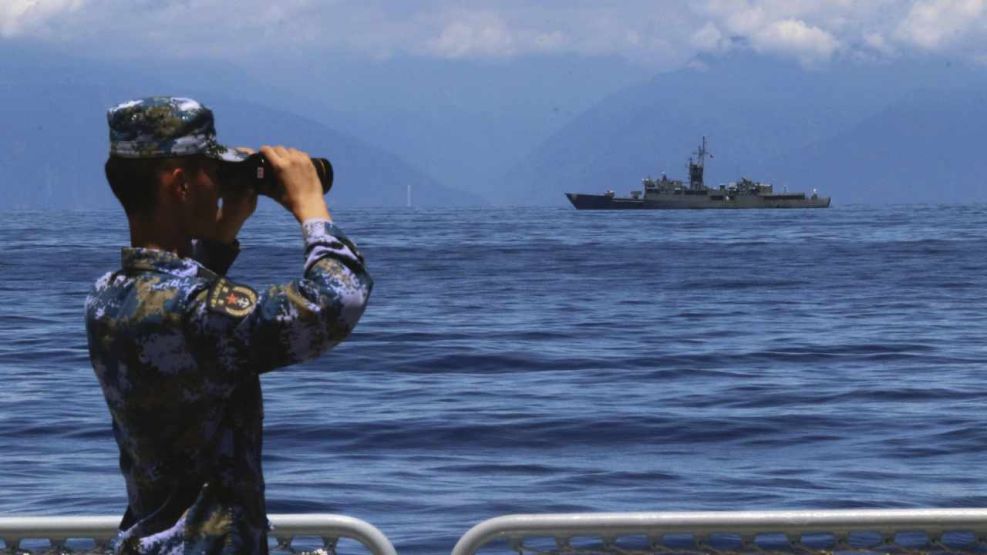 EUROPA DEBERÍA APOYAR A JAPÓN EN EL TEMA DE TAIWÁN
El presidente chino, Xi Jinping, considera la «reunificación» de China continental con Taiwán como un elemento central de su legado. Takaichi Sanae declaró que la agresión china contra la isla democrática autónoma podría constituir una «situación que amenaza la supervivencia» de Japón.
Un líder mundial finalmente dijo en voz alta lo que no se decía sobre Taiwán. El mes pasado, la nueva primera ministra de Japón, Takaichi Sanae, declaró que la agresión china contra la isla democrática autónoma podría constituir una «situación que amenaza la supervivencia» de Japón, lo que justificaría una respuesta militar.
Takaichi tiene razón, pero no solo Japón se vería afectado. Dado que Taiwán produce el 90% de los semiconductores más avanzados del mundo y alberga uno de sus ecosistemas tecnológicos globalizados más dinámicos, un bloqueo o una invasión repercutirían en la economía global, inclinando potencialmente la carrera por el liderazgo en inteligencia artificial a favor de China. La caída del Taiwán libre también alteraría el equilibrio de poder en el Indo-Pacífico, colocando a gran parte de Asia bajo el yugo de China, a la vez que consolidaría su dominio sobre los mares de China Meridional y Oriental. Por estas razones, un conflicto por la isla podría escalar hasta convertirse en una guerra más amplia.
El presidente chino, Xi Jinping, considera la «reunificación» de China continental con Taiwán como un elemento central de su legado. La isla albergó al gobierno en el exilio del líder del Kuomintang (Partido Nacionalista Chino), Chiang Kai-shek, tras el establecimiento de la República Popular en 1949, pero desde entonces se ha convertido en una democracia liberal de alta tecnología, ultramoderna y resiliente. Precisamente por eso Xi la ataca: así como una Ucrania soberana amenaza el régimen del presidente ruso, Vladimir Putin, al demostrar que una democracia vital puede arraigar en un país postsoviético, Taiwán desmiente la afirmación del Partido Comunista de China de que la cultura china es incompatible con el capitalismo democrático.
Como era de esperar, los comentarios de Takaichi provocaron la furia de los líderes chinos, quienes inmediatamente pusieron en práctica su estrategia de «guerrero lobo», también utilizada contra Australia tras exigir una investigación sobre el origen de la Covid-19, Lituania cuando abrió una oficina de representación en Taiwán y Noruega cuando se otorgó el Premio Nobel de la Paz al disidente chino Liu Xiaobo. La estrategia básica es simple: fingir indignación, amenazar y persuadir, y luego utilizar el colosal poder de mercado de China como arma para obligar al «adversario» a ceder.
En el caso de Japón, China afirmó que Takaichi había cruzado una «línea roja», advirtió sobre los riesgos para la seguridad de los chinos que visitaban el país, canceló el estreno de películas japonesas y suspendió las importaciones de mariscos. Pero Takaichi no ha cedido. Entiende que la disuasión depende de un compromiso claro y firme de defender la democracia y la autodeterminación en Taiwán.
Sin embargo, lejos de seguir el ejemplo de Takaichi, otros líderes democráticos, especialmente en Estados Unidos y Europa, parecen prestar poca atención a la amenaza que enfrenta la isla. Están demasiado preocupados por renovar los esfuerzos diplomáticos para poner fin a la guerra en Ucrania, un conflicto que tal vez nunca habría comenzado si Estados Unidos y Europa hubieran mostrado mayor determinación tras la invasión rusa del este de Ucrania en 2014 y la anexión ilegal de Crimea.
En lugar de repetir errores del pasado, los líderes europeos deben empezar a predicar con el ejemplo. Esto incluye luchar por una resolución justa de la guerra en Ucrania. Un acuerdo que recompense al agresor, como la entrega de territorio ucraniano a Rusia, indicará a los autócratas de todo el mundo que las democracias occidentales no están dispuestas o no pueden imponer el orden basado en normas que crearon tras la Segunda Guerra Mundial. En un mundo donde la fuerza dicta la ley, China puede tomar lo que quiera.
Pero los líderes europeos no pueden dejarse absorber tanto por la difícil situación de Ucrania que ignoren la amenaza directa y existencial que enfrenta Taiwán. Durante su cumbre de tres días con el presidente francés, Emmanuel Macron, en China, Xi intentó aprovechar el deseo de paz de Europa en Ucrania ofreciendo apoyo diplomático a cambio del repudio europeo a Takaichi. Macron no mordió el anzuelo, pero se debe hacer más. Europa debe unirse a Japón para abandonar cualquier ambigüedad sobre su compromiso de imponer altos costos a China por cualquier acto de agresión contra Taiwán.
Además, la Unión Europea debe intervenir para contrarrestar la coerción económica de China, ofreciendo a Japón apoyo económico inmediato y tangible, ya sea tomando medidas de represalia contra China o uniéndose a Japón para presentar un caso ante la Organización Mundial del Comercio. Esto podría allanar el camino para la codificación de dicha solidaridad económica, con los países democráticos comprometiéndose a apoyar a cualquiera de sus filas que se enfrente a la coerción económica. Considérese como una versión económica de la cláusula de defensa colectiva de la OTAN.
Así como Putin fue claro sobre sus intenciones hacia Ucrania, Xi no ha dejado lugar a dudas sobre sus planes para Taiwán: ha ordenado al Ejército Popular de Liberación que esté listo para invadir la isla en 2027. Dicha invasión probablemente comenzaría con un bloqueo económico de la isla, que depende de las importaciones, en particular del suministro de energía. Si bien la imprevisibilidad del presidente estadounidense Donald Trump podría tener un efecto disuasorio, hemos visto que Estados Unidos no es confiable. La única manera creíble de evitar que China persiga sus planes en Taiwán es forjar un frente unido de democracias dispuestas a imponer costos exorbitantes si lo hace.
Tras la invasión a gran escala de Ucrania por parte de Rusia en 2022, las redes sociales taiwanesas se vieron inundadas por el lema «Ucrania hoy, Taiwán mañana». Ese escenario es aún más probable ahora. El riesgo es que nos centremos tanto en el presente que no veamos el futuro.
Fuente: https://www.perfil.com/noticias/opinion/europa-deberia-apoyar-a-japon-en-el-tema-de-taiwan.phtml
EUROPE SHOULD SUPPORT JAPAN ON THE TAIWAN ISSUE
Chinese President Xi Jinping considers the «reunification» of mainland China with Taiwan a central element of his legacy. Takaichi Sanae stated that Chinese aggression against the self-governing democratic island could constitute a «survival-threatening situation» for Japan.
A world leader has finally spoken out about Taiwan. Last month, Japan’s new Prime Minister, Takaichi Sanae, stated that Chinese aggression against the self-governing democratic island could constitute a «survival-threatening situation» for Japan, justifying a military response.
Takaichi is right, but it’s not just Japan that would be affected. Given that Taiwan produces 90% of the world’s most advanced semiconductors and is home to one of its most dynamic globalized technology ecosystems, a blockade or invasion would reverberate throughout the global economy, potentially tilting the race for leadership in artificial intelligence in China’s favor.
Published twice per week by Nuevo Poder. Articles and op-eds focusing on geopolitical issues around Indo-Pacific area
Editor: LW, senior fellow of REDCAEM and CESCOS
Submit contributions (that can be read with ease and pleasure), to ilwb@email.cz